An interview with Victoria Nabulime
.svg)


.svg)
.svg)
An interview with Victoria Nabulime
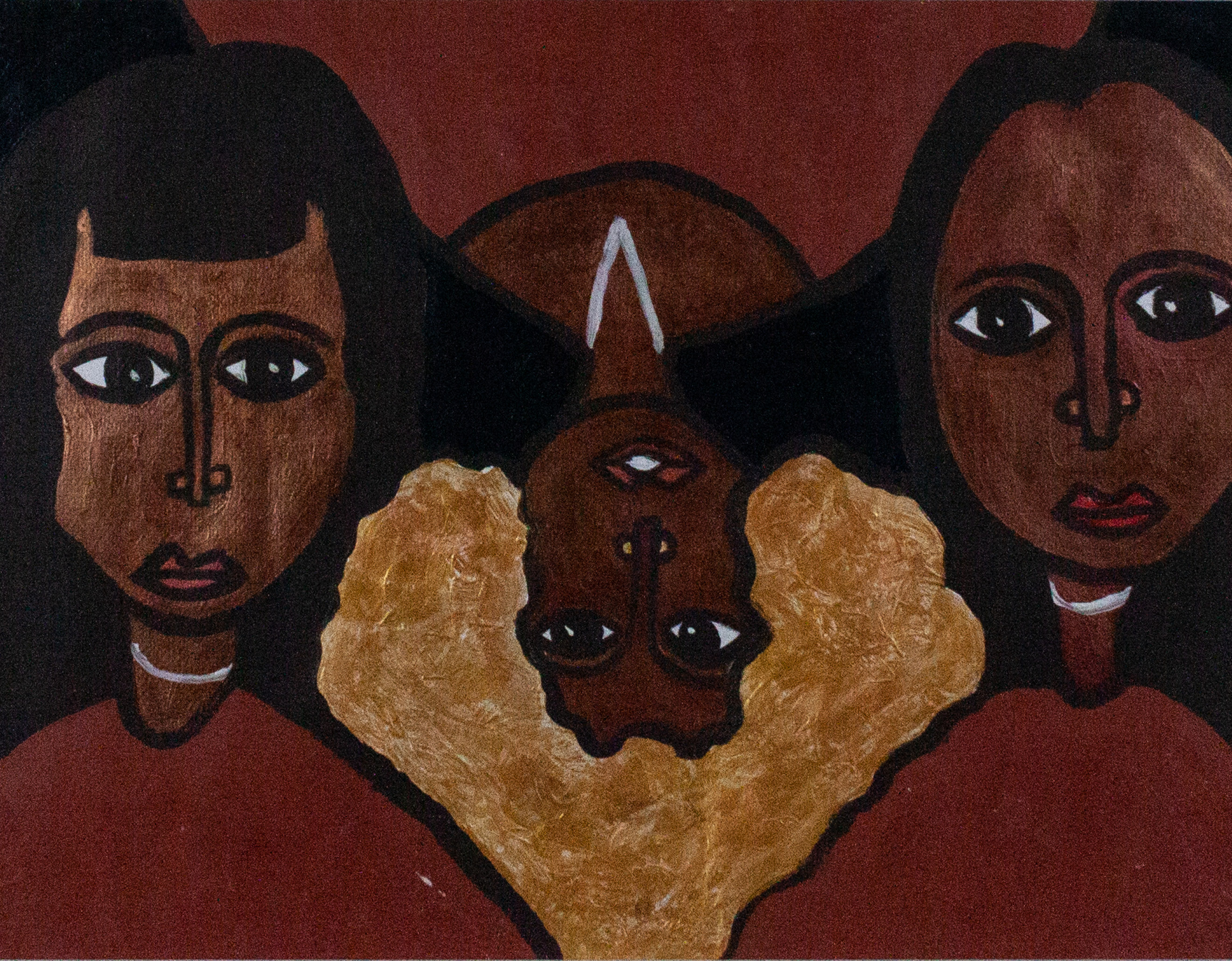
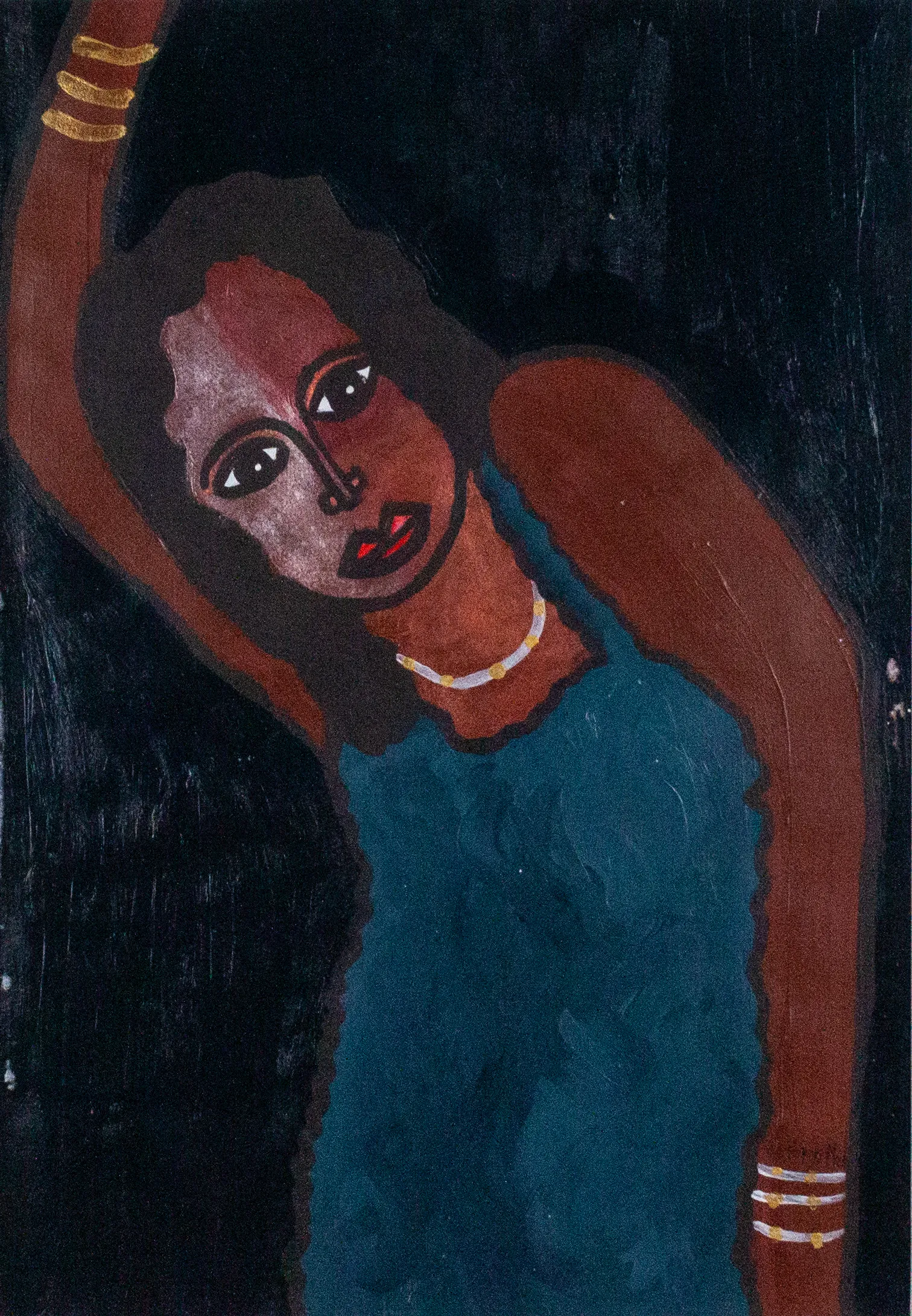
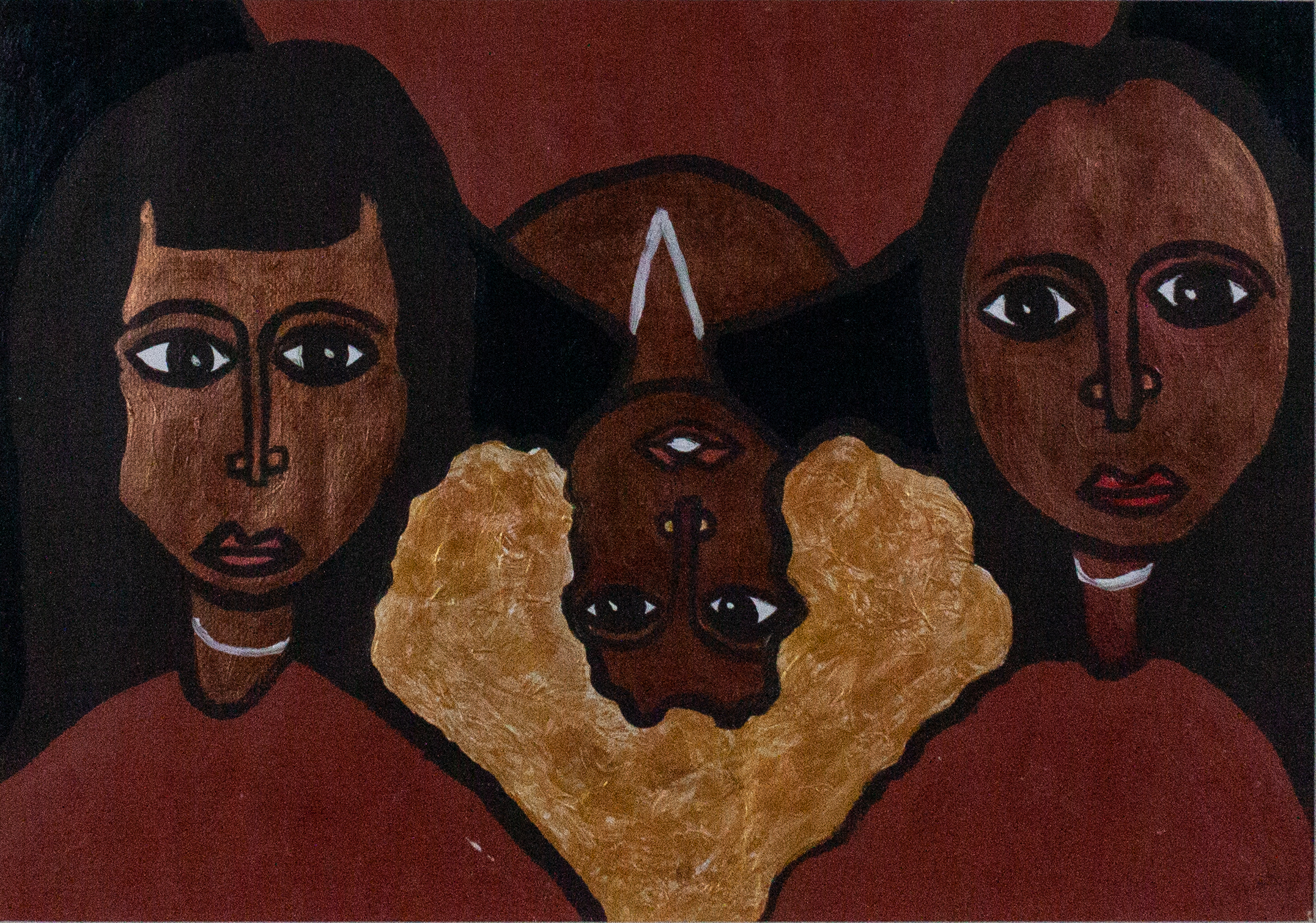
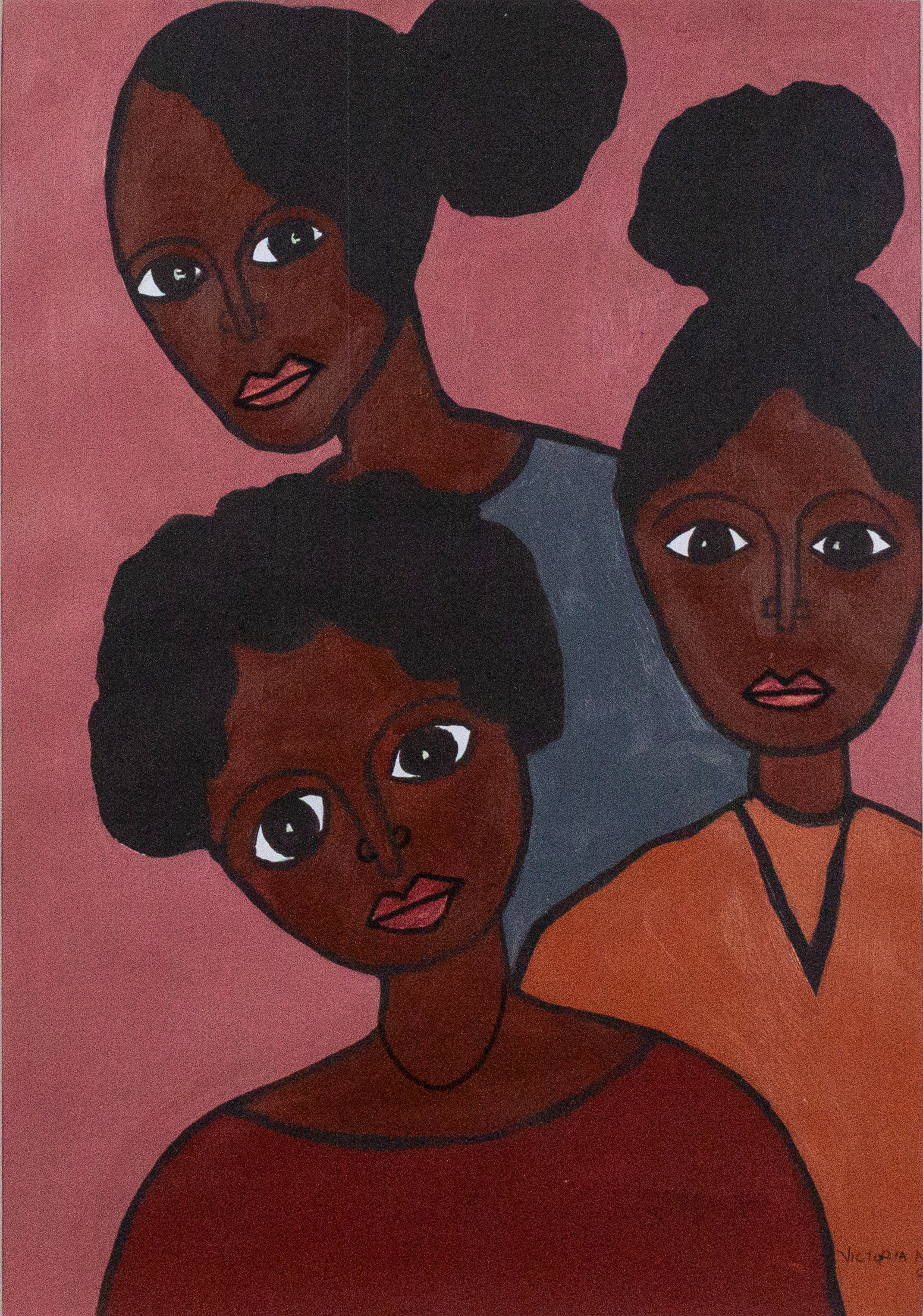
Victoria Nabulime is a Ugandan painter who first showed an interest in art at the age of five, when she started with small drawings of faces and flowers on paper in her father’s studio. Her professional practice started in 2019. Her work explores the relationship of sisterhood from the lens of childhood, themes of innocence, personhood and emotion.
Dominic Muwangudzi speaks with the artist for ARAK.
Why do you make art?
I create art to mainly express myself because naturally I am an introvert. I find it easy to communicate whichever message I have through art. I also make art because it is my passion. I grew up around a lot of art. My dad is an artist and this early exposure to art drew me closer to it.
Is Africa or the African diaspora apart of your vision? If so, what or which Africa?
Yes and No. As a young artist, I am still trying to understand myself, but also connect and understand my immediate community. Gradually I will reach out to a larger audience beyond the confines of where I live and work. Nonetheless, I have an organisation, and through this organisation our goal is to reach out to as many female artists across the continent and beyond who we believe are not being heard. Therefore, my vision as a young artist, for now, is not to connect with the wider Africa but to be grounded in my local community.
Is there anything original in art making? How do you reconcile influence and innovation?
In my art I get inspired by what I feel or my personal experiences and I think for me, this is original. But even for other artists, I believe that they’re original in the way they express themselves because of the different ways they convey their messages through their art. An artist could see a jerry-can but they present it as a box. This figurative representation is original to the artist because other people may see a box but the artist sees a jerry-can through that box.
The way I reconcile influence and innovation in my work is usually in subconscious ways. This is because, for me, it is never something I seek out to do in the first place. My role as an artist is to create and probably through creating I am being innovative. In many instances, I think it is up to the audience to determine if I am innovative or not.
Are you a self taught, home schooled, shaped by institutional values?
I should say that I am lucky to have had a diverse experience in art learning. For starters, my dad is an artist and he provided a strong foundation for me at home to be an artist. There’s this first drawing I made when I was about five years and I still have it because my dad framed it for me. I always look at it and remember how my journey to be an artist started. But I also went to art school and learned about the elements of art: how to mix colours and the different art movements. That exposure was important to me to know what artists before me were creating and also how to develop an artwork. However, I think art school is very conservative because it teaches you to create in a particular way and not the way you feel or like. I was lucky, that I had created art before going to art school and this early exposure influenced my open mindedness while creating art at school. Because of that background, I am always eager to learn and explore new ways of making my art better and be understood.
Does art need society to exist? Is art the inspirational core, a reflection of what society is, or can be?
Yes, art needs society to exist. Artists look at society as a form of inspiration for their work and on the other hand, society is the audience artists need for the work they create. Similarly, art feeds on society and it’s a reflection of what is happening there. In a nutshell, the two co-exist as none can exist without the other.
What role do you think art institutions play in shaping the discourse around ‘Contemporary African Art’?
Art institutions play a big role in facilitating the work of artists to improve and reach new audiences. For example, my first residence was with Silhouette Artists Residency and this platform ushered me to new places I had never been to. If it wasn’t for this residence, I believe it would have taken me a longer time to be where I am now. Therefore, such institutions need to be commended for the contribution they are making to artists’ careers. I only pray that we can have more of these institutions, that more artists can benefit from their programmes.
Do you see a relationship between art and activism within the context of ‘Contemporary African Art’?
Yes. There’s certainly a relationship between art and activism. Within my practice, I have so far worked with three activist organisations that’ve used my art as a tool to pass on the message they have to their respective audiences. More so, when artists add activism to their art, it helps them to reach much wider audiences.
If I said that African Art is a global game changer. What might this mean to you?
According to me, African art is a global changer in a sense that almost everyone wants to own an African art piece by an African artist. African art is something that is selling quite a lot now globally, perhaps something that was not the case many years ago. Equally, it feels good now to be an artist because of the international recognition we get for our work.
Is the medium the message? Is supplementary content important?
Yes, the medium is the message or part of the message. I use colour to convey a particular message to my audience. I usually use warm or dull colours to communicate a vibrant feeling and yet if someone else used the exact same colours, they would end up passing on sad energy. My work is generally about positivity and this is brought out by the way I handle my medium—the colours. The same can be said about the supplementary content in the artwork. As an artist, anything you work with in your art which is besides the major content is equally important. It could be material, theme or backdrop/background which can be used to incite a particular feeling or mood in the audience but more so, to express the way the artist felt while creating the art.
What theme(s) or message(s) do you wish to delineate through your work? Why do you think you need an audience and why is it important?
My work explores themes of sisterhood, the life circle of women, coming of age, and the resilience of the female spirit. Do I need an audience and is it important? Yes, I believe I need an audience because, firstly I need people who can relate to what I do. If they’re not there, I wouldn’t have any reason why I create. Secondly, I need an audience to get feedback on what I am saying. I said before, my art is my voice and because of this I need to know if I am being heard and understood. An audience provides such assurance and I think every artist needs this as a form of motivation to work harder, but also have their message put across more effectively.
What role do you think criticism/art writing plays in the contemporary art market? What does it mean for your own practice?
Art criticism is important because it helps the artist to determine the progress of their art. I usually reach out to more experienced artists to get honest opinion on my practice and whatever feedback I receive, I put it in practice. This has been very helpful in terms of pushing me outside my comfort zone to realising my full potential as an artist. Additionally, art writing is important because it provides documentation of the artist’s work. It is understandable that many artists are not good at writing about their art and for this reason, they need people who can package whatever they want to say into words. When an artist is written about in a professional manner, it gives them visibility beyond the confines of their home. This can also lead to their art to breaking into the international stage.
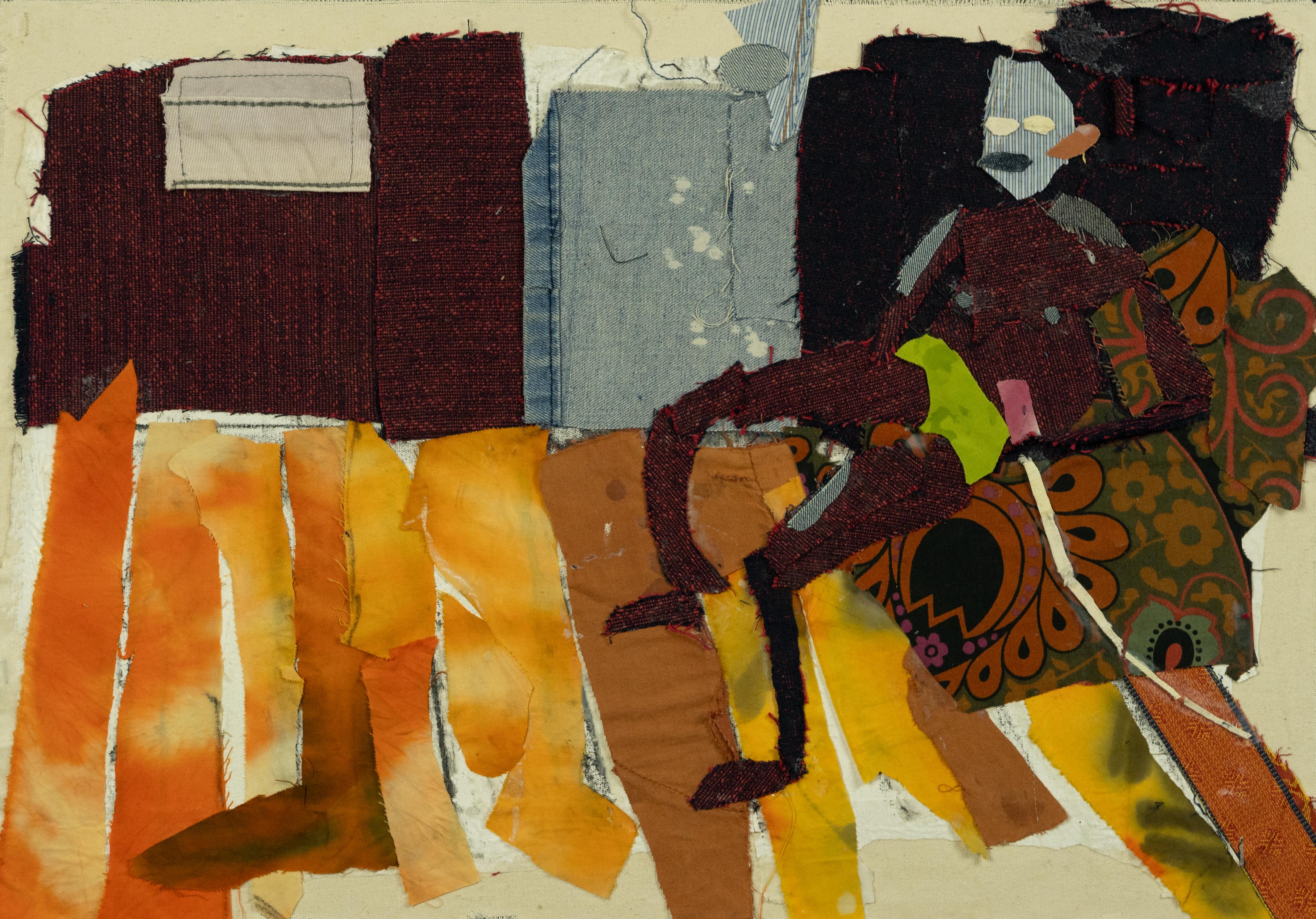
Cover artwork: Victoria Nabulime, Untitled, 2023. Acrylic on paper, 30 x 42 cm

.jpg)