Tapestries of Johannesburg in the work of Kagiso Patrick Mautloa
.svg)


.svg)
.svg)
Tapestries of Johannesburg in the work of Kagiso Patrick Mautloa
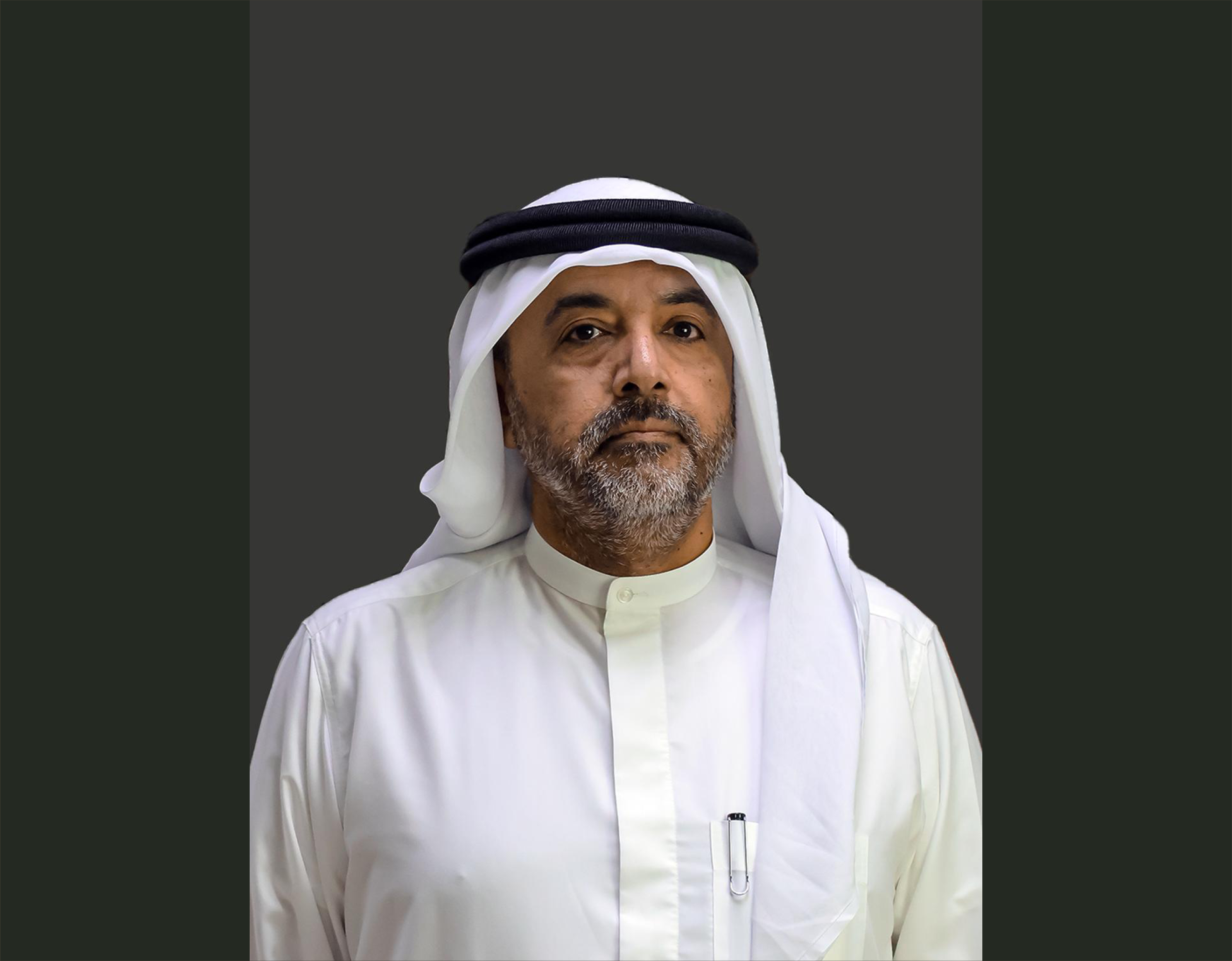
Pauline Buhlebenkosi Ndhlovu
Kagiso Patrick Mautloa (b. 1952) is a South African multimedia artist whose work encompasses different mediums including modernist painting, drawing, print and sculpture. Mautloa was born in Ventersdorp, in the North-West province, and his family relocated to Johannesburg in 1954. He grew up in Johannesburg, studying at the Mofolo Arts Centre in Soweto in the early 1970s, where he later taught. Between 1978 and 1979, he completed a diploma in Fine Art at Rorke's Drift Art and Craft Centre in KwaZulu Natal, where he met John Ndevasia Muafangejo, a Namibian artist known internationally for his linocuts, woodcuts and etchings. Mautloa was drawn to the subject matter of Muafangejo’s work, which straddled the themes of ordinary life, social history and political events.
Mautloa works from his studio at The Bag Factory in Johannesburg. He states that working in a collective of studios enables him to generate new ways of seeing the work through conversations and art discussions with his neighbours at the studio. Mautloa’s work has been shown in various solo and group exhibitions, and his pieces are featured in various public and private art collections. Significant exhibitions in Mautloa's early career include a 1984 group show at Grassroots Gallery in Westville, Natal, and multiple Thupelo Workshop Exhibitions held in Johannesburg, Durban, and Gaborone, Botswana, demonstrating his active role in the art community. In 2019, he received the Helgaard Steyn Award for his practice, which is awarded to artists who demonstrate exceptional artistic achievement and innovative leadership over a sustained period.
Working both figuratively and abstractly, Mautloa often works with texture by integrating found objects from his surroundings in the urban landscape of Johannesburg, a city he has called home for the past 60 years. His work grapples with the changes he has been observing over time, from the mundane and rudimentary urban lifestyle to the critical ongoing socio-economic questions around reparations and other political shifts.
.jpg)
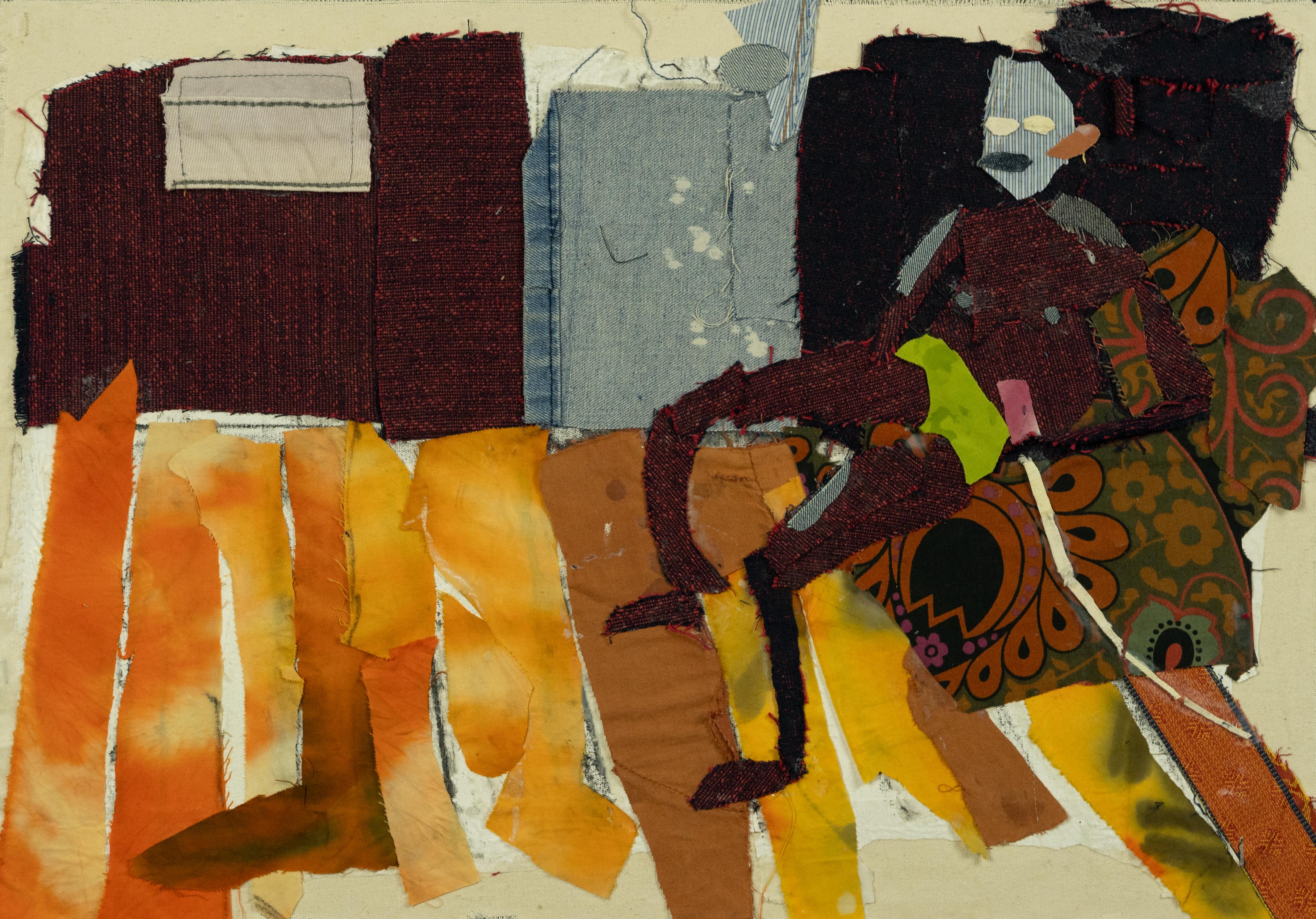
The ARAK Collection currently hosts several artworks by Mautloa, ranging from a painting titled “window” (1995) to a pastel on paper piece titled “abstracted face” (2012). His works in the collection are characterised by their spirited use of colour, texture, and form. For example, his earlier work “the face” (1990) is a dynamic mixed media on canvas laid on a wood panel that incorporates hues of yellow, green, red, and black to produce an abstract face. This work is in conversation with his other abstract paintings that frequently incorporate a variety of materials, such as fabric, metal, and objects, creating a layered and tactile experience for the public that engages with his work.
The way Mautloa plays with surfaces is expressive and his artworks in the collection are surfaces on which he writes the urban tapestries of Johannesburg. Mautloa’s surfaces suggest movement, and his mark-making ultimately captures something of the ephemeral, extraordinary and ordinary everydayness—the textures, material, wood, stories, and social dynamics embedded in his work mirror the everyday mark-making of people in the city. The layering of surfaces within his work also reveals that first impressions often require further investigation, usually requiring the viewer to spend more time with each work, observing and interrogating the graininess, variability, and angularity he achieves, and ultimately the metamorphosis of figures, spaces and people which results from this combination of techniques, materials and colour. “Faces” (2007), for instance, an oil on canvas work that depicts light pink faces overlapping in a contemplative manner, all looking in various directions but never at the viewer, has the quality of being both intimate and far away - intimate in that their faces and gazes invite our looking and our curiosity, and far away because their scattered gazes direct us outwards, outside the canvas, outside ourselves perhaps, into an expansive elsewhere out beyond.

The various faces depicted in the majority of Mautloa’s work within the ARAK Collection, comprise a recurring theme that he revisits throughout his career. Key to the various faces are the eyes of the subjects he paints. As a keen observer and witness, Mautloa shares that he often generates a way of seeing new work by revisiting previous works and by observing and using material he finds in the city. These processes of regeneration and revisitation require a witness whose sight is unendingly renewed. Through his technique, his layering produces a tactile association with a quality of softness that depicts a collage of various people he encounters, overlaid with a mood that encapsulates key changes in the city. These faces mark an important presence in a city still grappling with post-apartheid conditions, and where informality is often used as a signifier or negator that often marginalises and discards or ostracizes Black residents. Other examples of faces in the collection include “abstracted face” (2012), “man with hat” (2012) and “head ii” (2012), all pieces rapturous with colour.
His figurative work in the collection includes a sketch on paper titled “child and self-portrait” (2012), depicting a sketch of a side profile of a child layered with a side profile self-portrait of Mautloa. This art is possibly a charcoal sketch against a white paper background. Mautloa’s portrait is overlapped with the child’s face in the foreground, and in this work Mautloa ponders on his life and his growth away from the public’s gaze as both the child and Mautloa face sideways in the piece. Mautloa’s art trajectory began early in his life, and perhaps it is through this work that he allows himself to reflect on his journey.
Mautloa’s work is informed and contextualised by his surroundings, and in many ways, it constitutes a study of life happening both within and around him. His work is in dialogue with the ebbs and flows of a city he has lived in for over six decades, in this way the duration and temporality of his practice expands on critical ways of being in relation with his environment. Through his engagement with his setting, Mautloa identifies and reinvents himself constantly through his art. The time during which he has been creating his art also allows him to be in a continuous and porous state of creation, where he is not confined to one practice nor static in his approach. He explores belonging and the power imbalances faced by Black city dwellers, some of whom include street vendors who sell various goods and food on the streets of Johannesburg. Ultimately, by interrogating the power dynamics at work in a city that has undergone significant changes throughout his lifetime, such as the 1976 Soweto student uprisings during apartheid and the 1994 democratic elections—Mautloa’s work asks us to consider what constitutes belonging to a place and the ways that ordinary people inform how a city grows and develops. By incorporating various materials from his surroundings, Mautloa revisits his memory, assembling these materials to create renewed pieces.
In “A Map to the Door of No Return” (2001), Dionne Brand reminds us that, “there are ways of constructing the world — that is, of putting it together each morning, and what it should look like piece by piece” (Brand, 2001: 181). Similarly, Mautloa constructs and puts together the world as he witnesses and dreams it, through the assemblage of materials, colour and texture, resulting in layered surfaces that depict multiple gradations of urban life in South Africa.
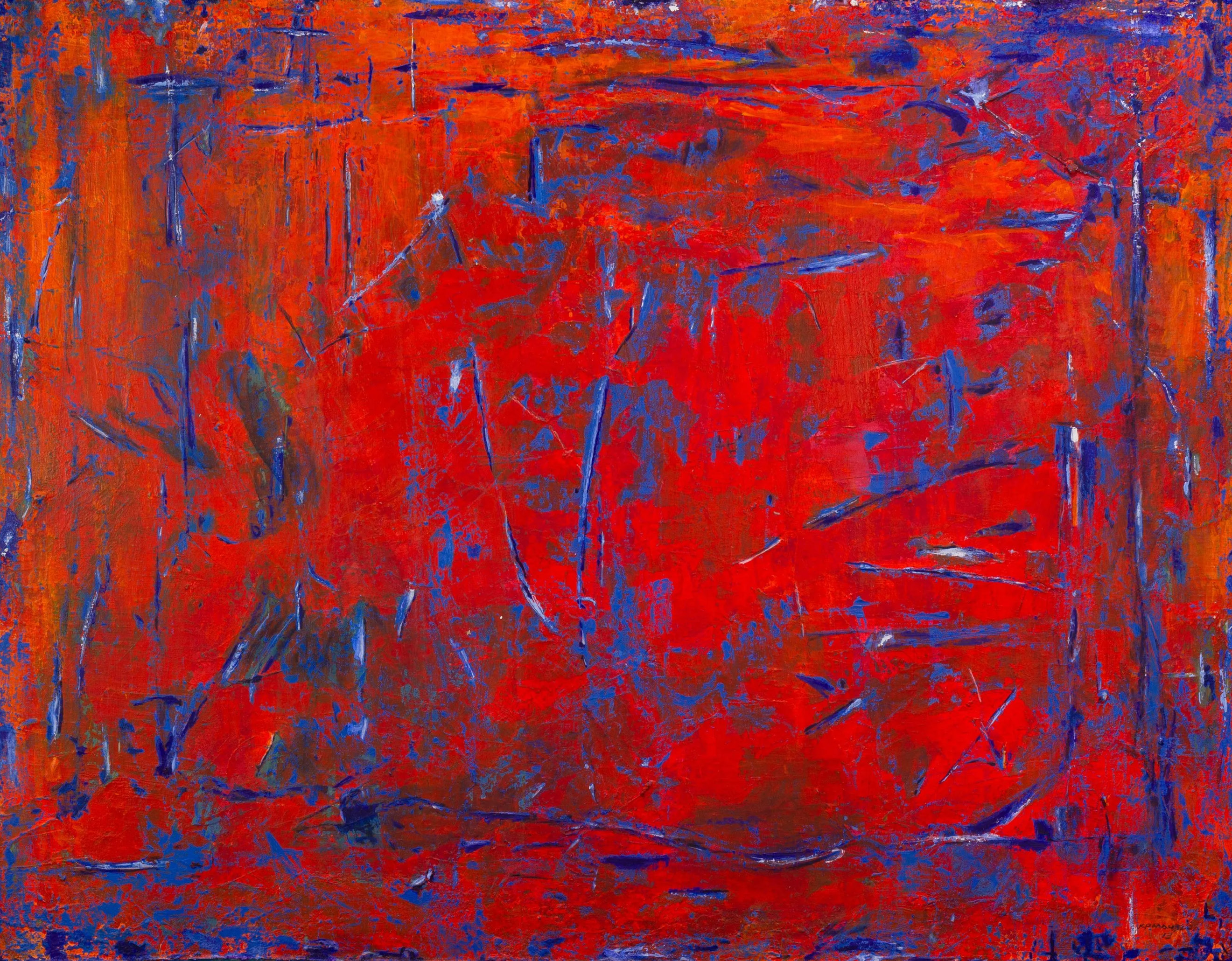
Cover artwork: Kagiso Patrick Mautloa,ntitled, 2013. Acrylic on canvas, 121 x 91cm

.jpg)