Home Is Where The Art Is: Why the future of Zambian art may lie beyond the gallery
.jpeg)
.svg)


.svg)
.svg)
Home Is Where The Art Is: Why the future of Zambian art may lie beyond the gallery
By Simweene Sijamba II
When you think of home, what comes to mind? A structure. A kitchen. A brown dining table worn smooth by years of use. A lounge filled conversation and bursts of laughter. Family. Memories. Perhaps even a pet waiting at the door; wiggling its tail.
“Build a home and live in it,” he told me.
“Home is an appropriated space; it does not exist objectively in reality,” wrote South African photographer Santu Mofokeng. You cannot speak of home, he suggested, without speaking of homelessness.
His words are instructive for thinking about art in Zambia today. If home is not simply a physical structure but a negotiated space of belonging, then art too cannot be reduced to a mere object hang on a wall.
A Blast to the Past: Art Before the Institution
For such a long time, art in many Western contexts has been framed as something external; something to be viewed in galleries, museums, or in foreign collections by foreign collectors. It is often encountered as spectacle, curated and mediated, separated from everyday life.
During my time at the Lusaka Contemporary Art Centre, I asked myself; who defines what art is, and where it belongs? Is art only legitimate when it is catalogued, institutionalised, and placed behind controlled walls? Or does its meaning emerge through relationship, memory and interaction?
Before the rise of institutional art spaces, cultural expression across the continent existed primarily within the domestic sphere. Objects were crafted, functional, relational and treasured. They lived with people. It is in this sense that art was not distant from life, but embedded in it.
To consider art as a vehicle for transformation and decoloniality in Zambia, one must therefore begin not in the gallery, but in the home. This raises important questions, for instance; is the gallery sufficient as the primary site of encounter? What shifts when art returns to the spaces of everyday life? What forms of cultural consciousness might emerge when art is experienced not as spectacle, but as presence?
The Home as Archive
The home is the first archive. Even in humanity’s earliest histories, it was in the cave that experience was engraved, where memory and survival were negotiated, and where the artefact was born. The cave was not only shelter. It was reflection. It was continuity. The site where the external world was drawn inward.
Philosopher Alain de Botton asks in The Architecture of Happiness why human beings are so vulnerable to the spaces they inhabit. Perhaps it is because we require physical structures to stabilise our inner uncertainties. If space shapes us, then the presence or absence of art within that space shapes us too.
Unlike speculative collecting shaped by market cycles, some collectors approach art as relationship.
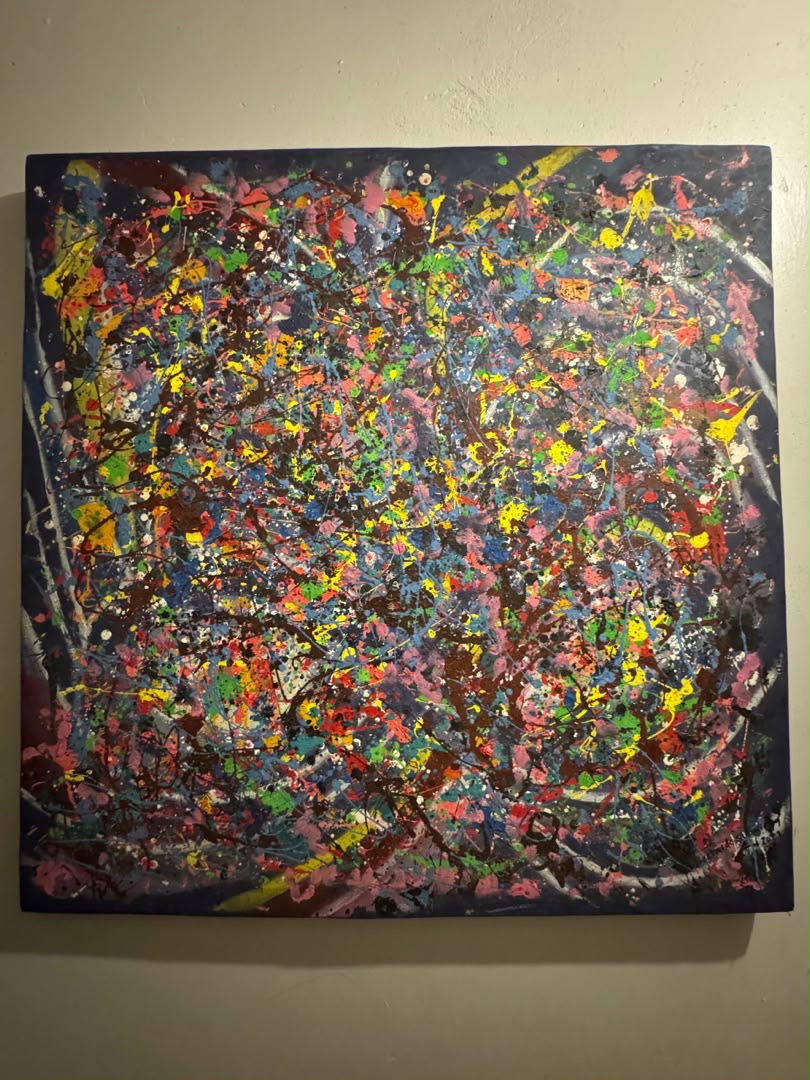
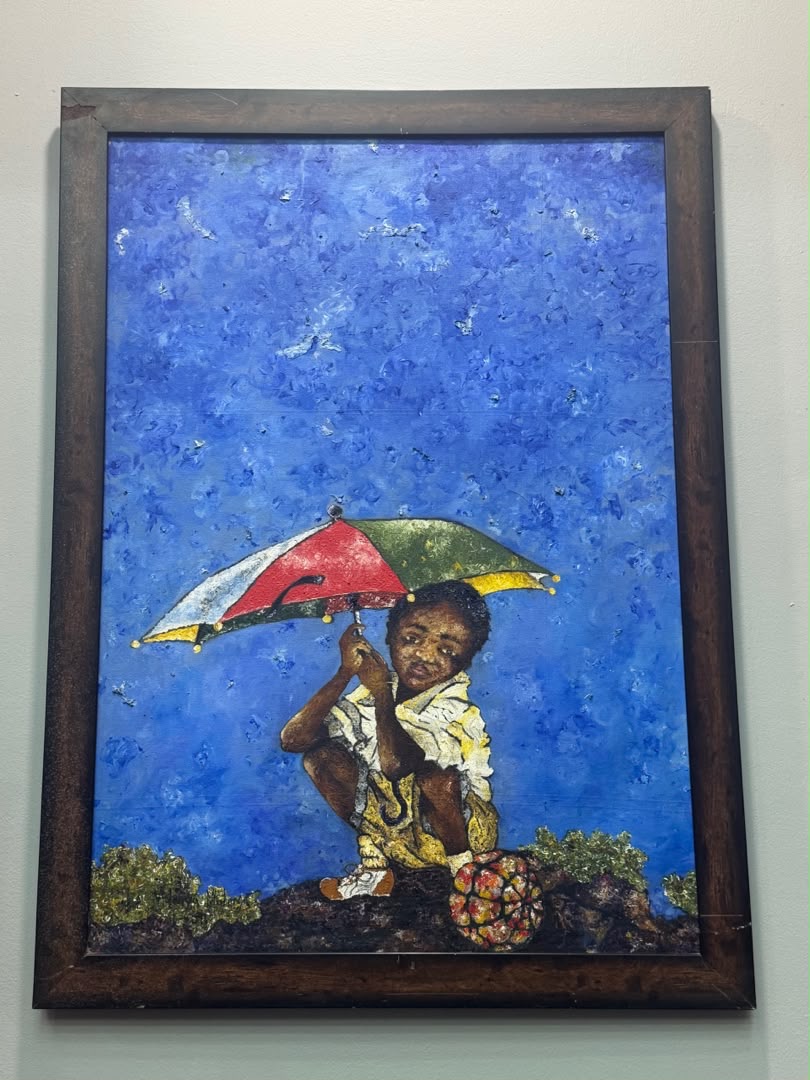
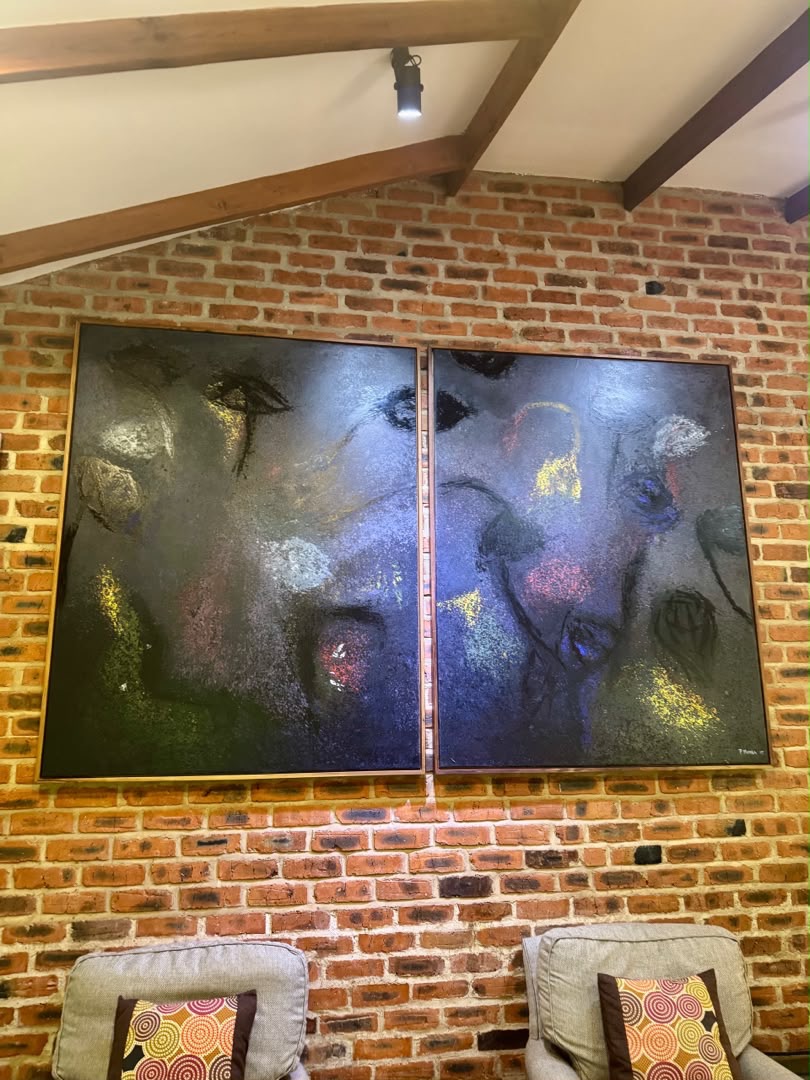
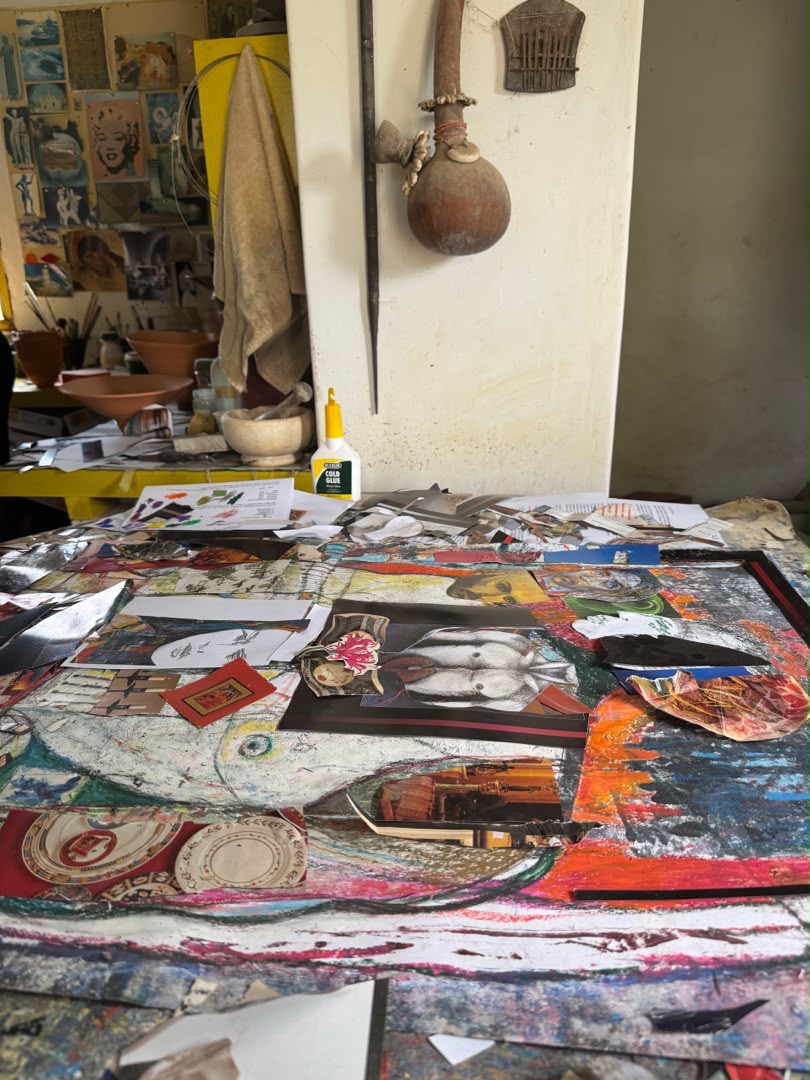
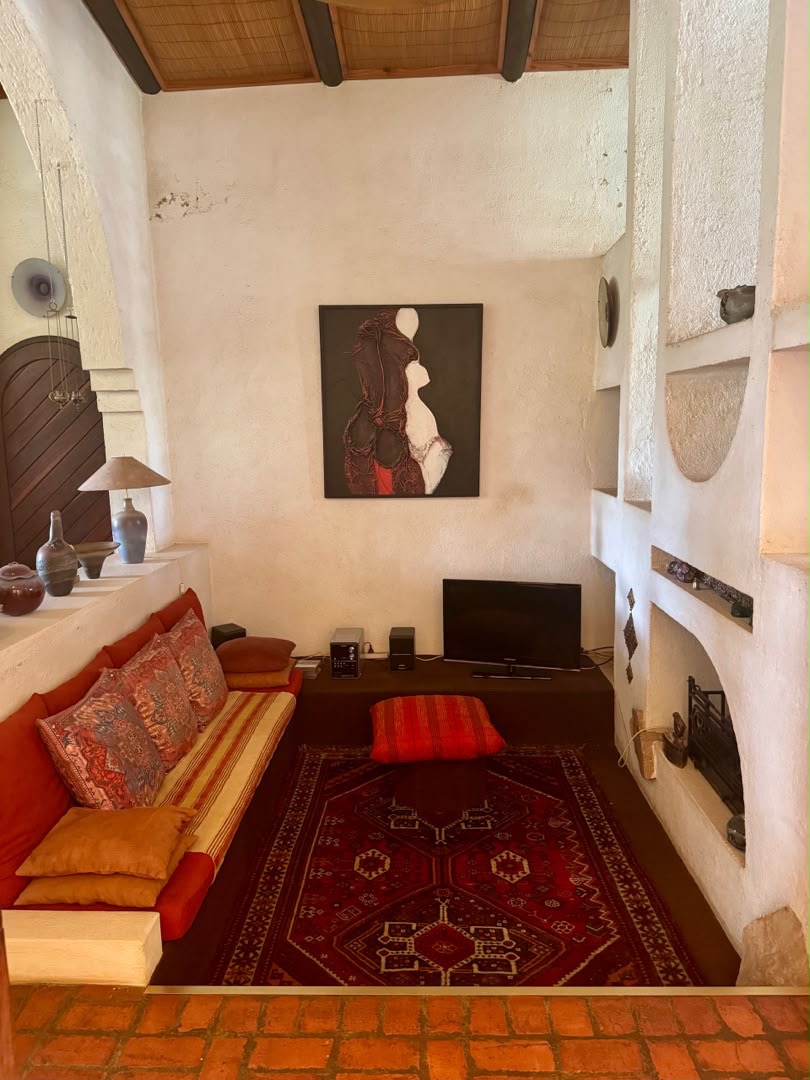
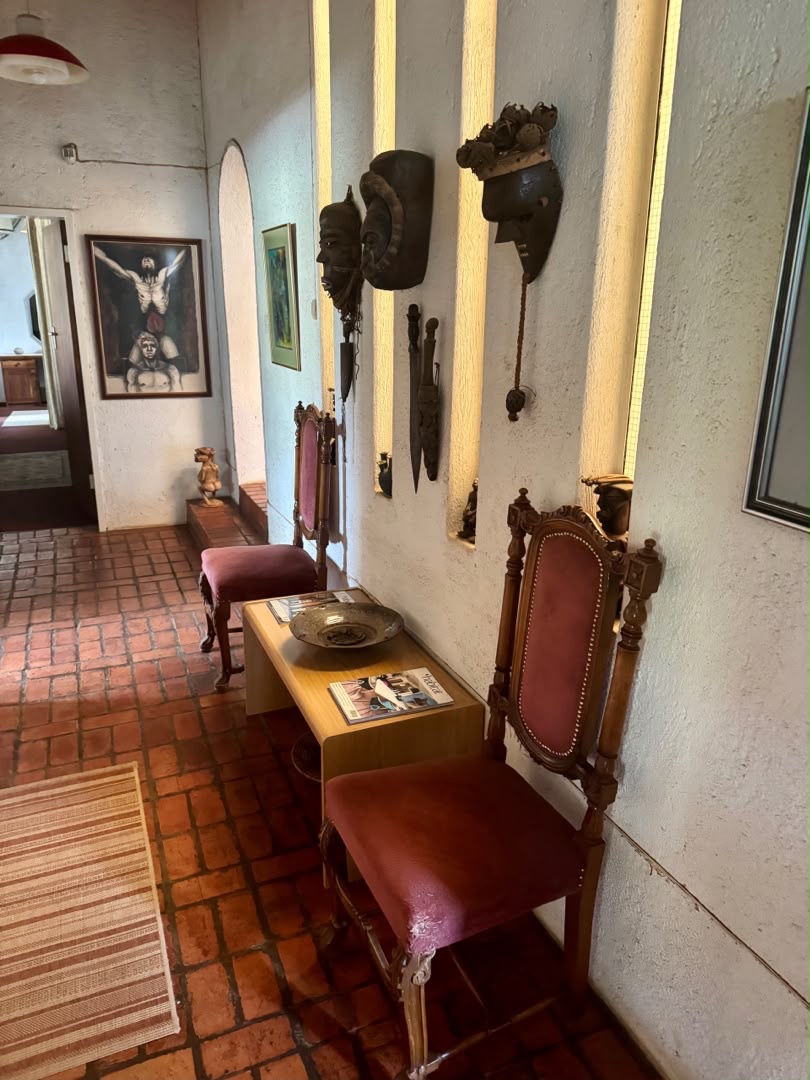
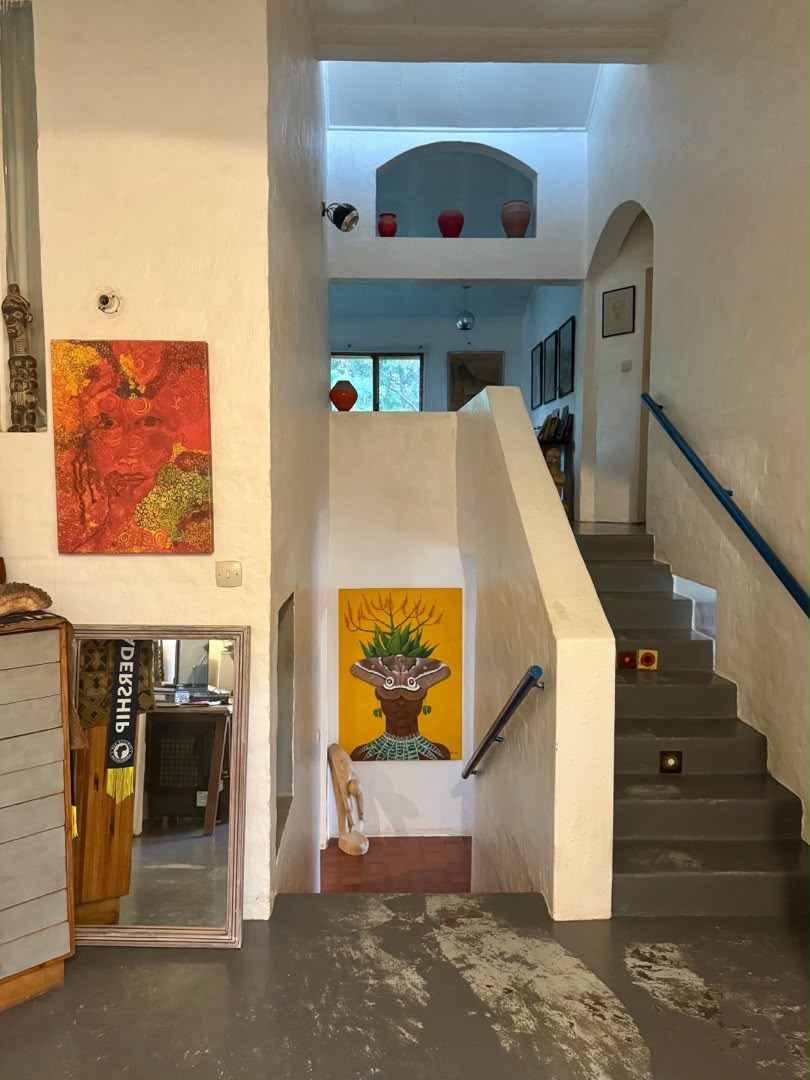
A visit to the Lwao residence reveals this philosophy in practice. The home unfolds as a carefully considered environment: Zambian sculptures anchor the garden spaces, pan-brick walls carry texture and warmth, Patrick Mumba oil on canvas paintings converse quietly from subtly lit surfaces. Light moves across the rooms, settling on wood, allowing each piece to breathe. The result is not display, but atmosphere — a lived encounter with not only culture
but beauty too.
For this married couple, collecting begins with falling in love with the artefact. The process was never strategic or planned. Instead, it emerged through attention. Mr Lwao describes being drawn to a work, sometimes standing before it for long stretches, absorbing its layers, its beauty, its emotional weight. Over time, the collection has grown into something that nourishes him.
Such approaches carry transformative potential. When collectors centre local artists, they strengthen creative ecosystems and enable sustained artistic production grounded in contemporary realities. More importantly, they keep cultural narratives rooted in lived experience rather than external approval. In doing so, they participate in a quiet but powerful process of re-centring African perspectives.
Displacement and Distance
Objects shape how we understand belonging, continuity, and community. Whilst stories circulate around them, they are tainted with cultural nuances. The domestic space is a site of cultural preservation and quiet resistance, often without conscious intention.
Colonial histories disrupted this intimacy. Cultural objects were stripped of their contexts and relocated into Western museums and private collections. Objects travelled but their meanings did not, reframed through external systems of classification and value.
A perculiar imbalance! But still familiar.
The loss continues in contemporary forms. As ceramic sculptor and painter Andrew Makronolis has observed, significant amounts of African and Zambian art have left the country, often without sustained cultural reinvestment.
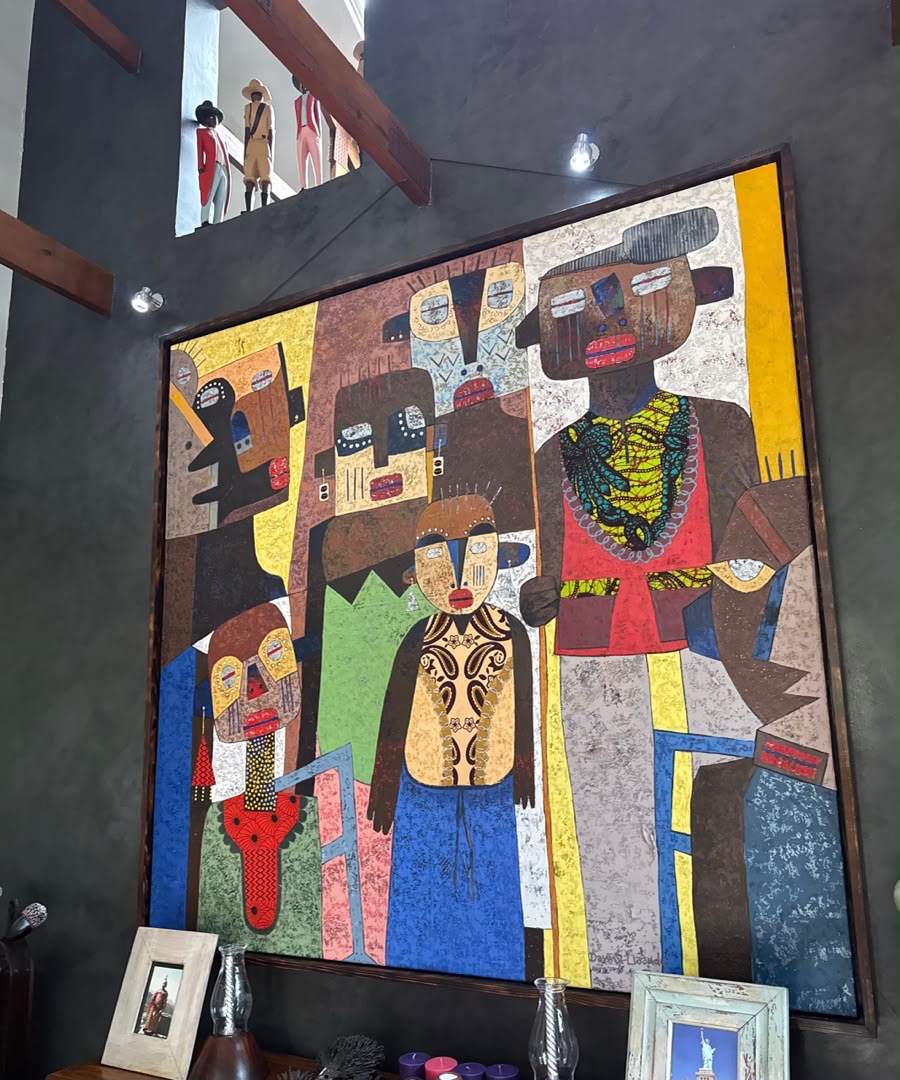
However unfortunate, thus it is so; African art is globally celebrated as aesthetic and economic capital, yet locally many communities remain distanced from their own visual heritage.
This displacement produces a form of cultural homelessness. If home is where memory resides, what happens when memory is stored elsewhere? Where does a memory go when its material anchor is removed?
Living with Art
Collecting alone is not enough. Engagement matters just as much. Art must be lived with, spoken about, and opened to others.
Within the home, art is part of daily rhythm. It witnesses ordinary moments such as family gatherings, celebrations, grief, and change. Over time, people form relationships with the works that surround them. These encounters nurture reflection, emotional connection, and cultural literacy. Art moves beyond decoration; it becomes presence.
This approach does not reject institutions. Instead, it expands their reach. Galleries create visibility, foster dialogue, and preserve artistic legacies. Spaces such as Lechwe Trust continue to build platforms where artists and audiences meet. Recent exhibitions, including works like Destiny by Henry Tayali, demonstrate how art can provoke reflection across
generations. Contemporary artists such as Gloria Hankombo, Boyd Bishonga, Mwaba Chandia, Kabwe Mhlanga, Bruno Milambo and a hell of a lot more continue to explore questions of urban transformation, identity, and memory, expanding the vocabulary of Zambian art.
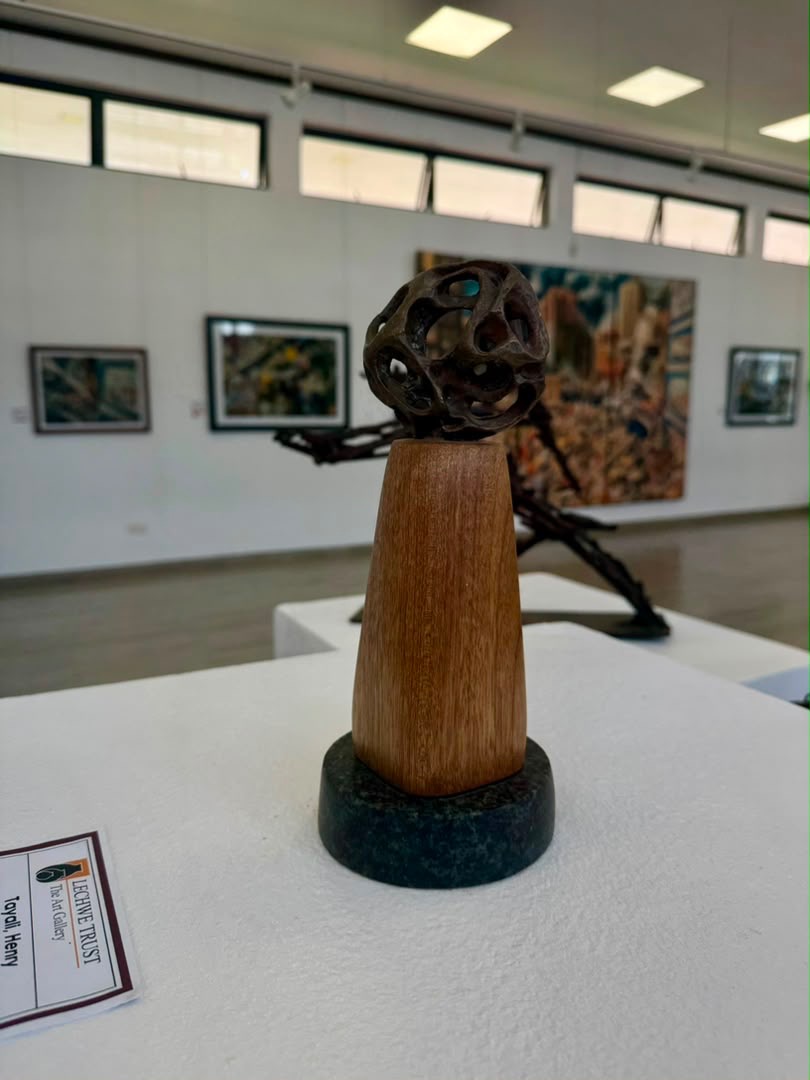
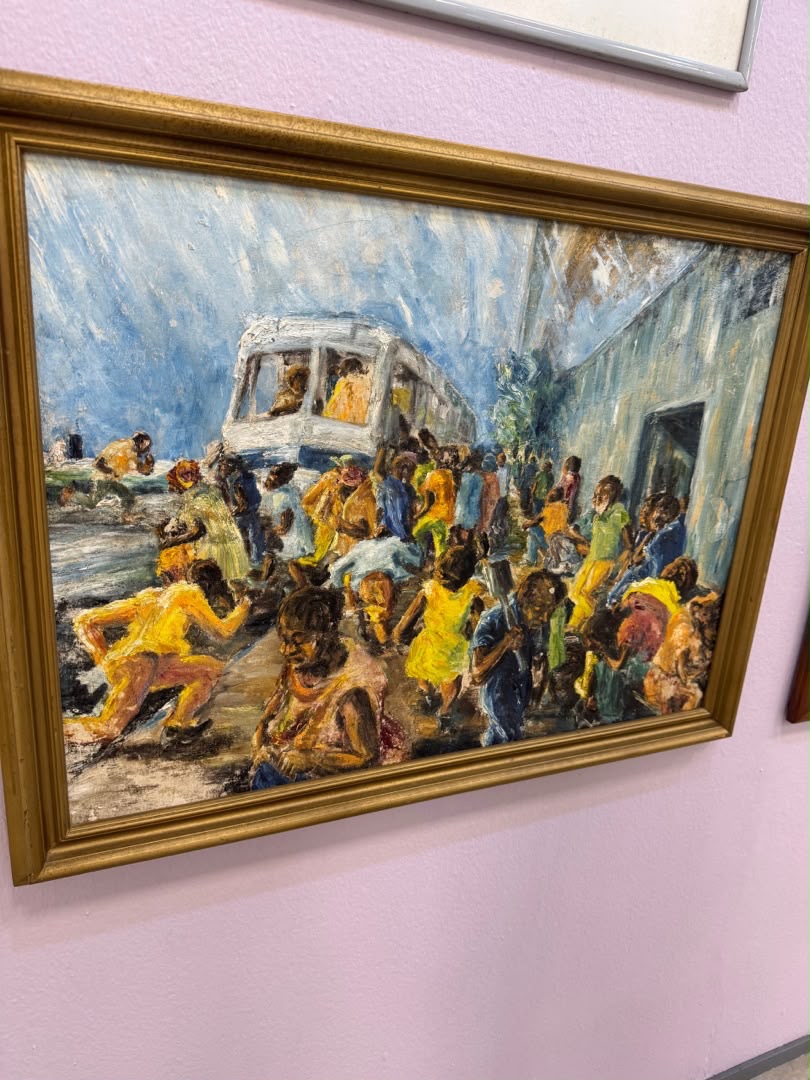
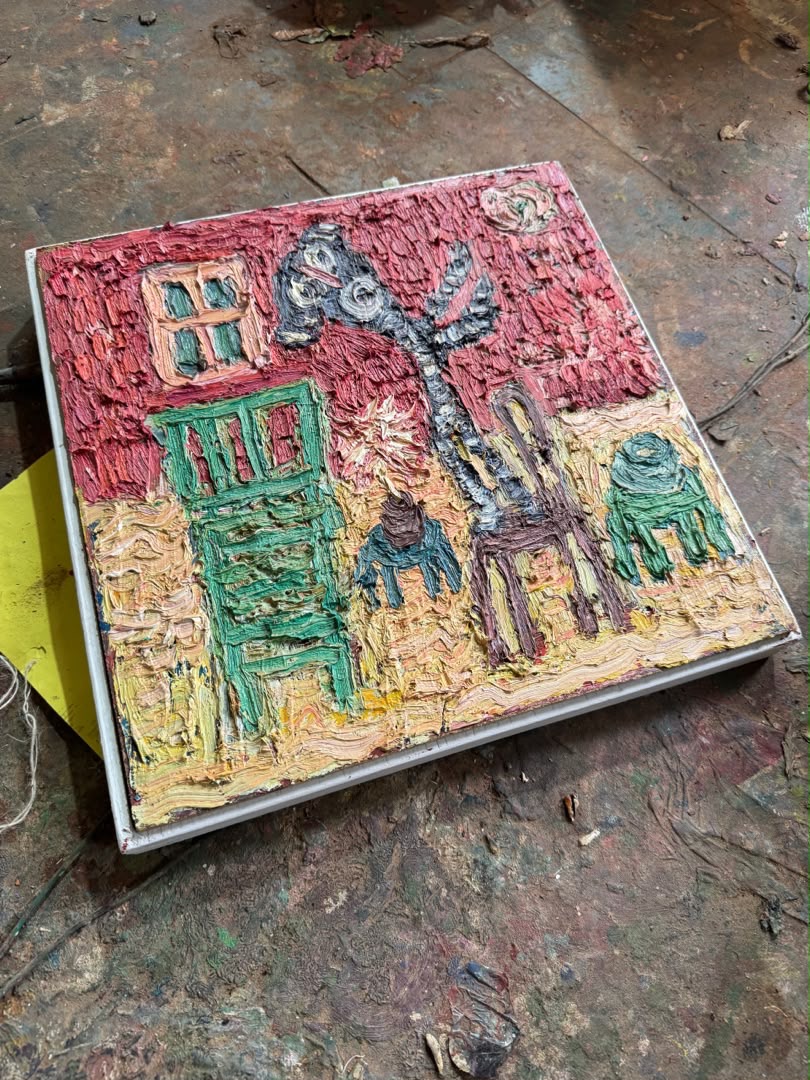
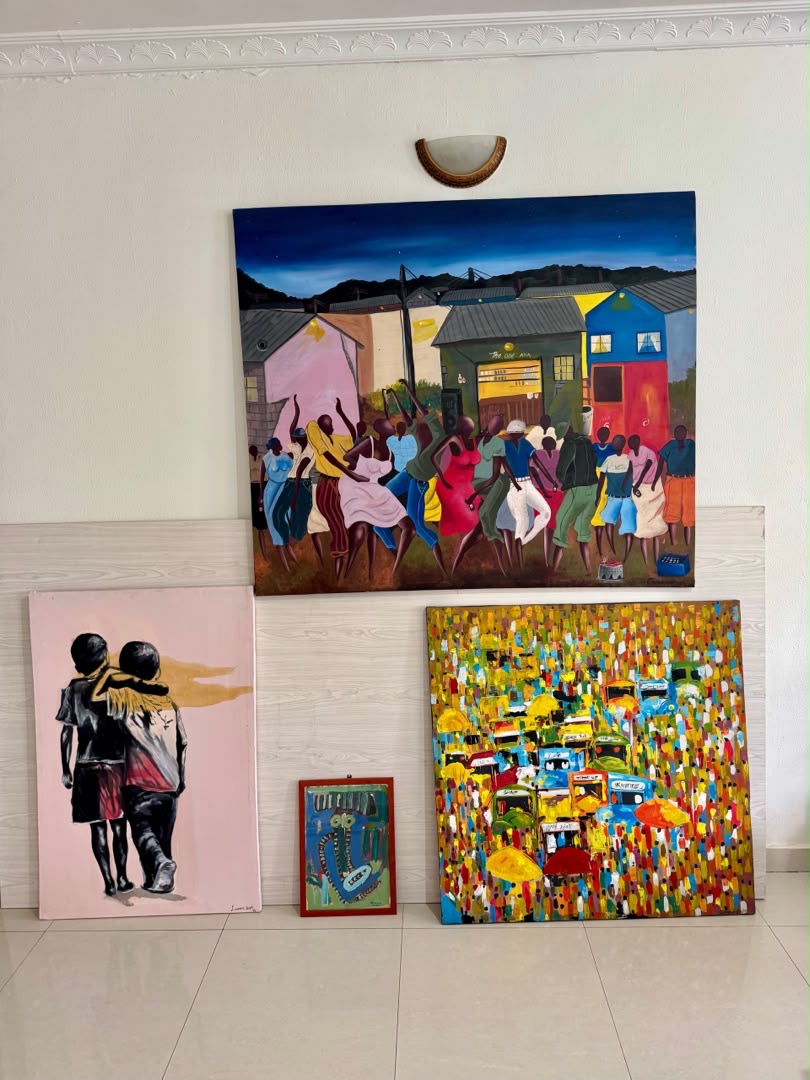
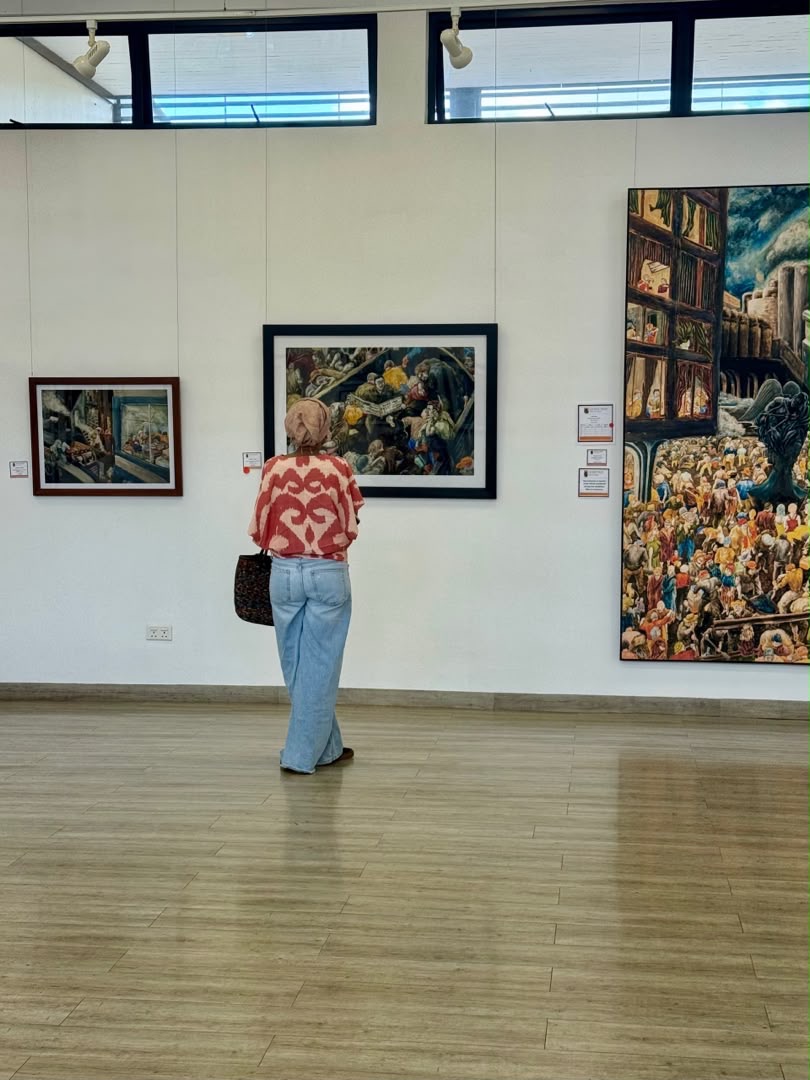
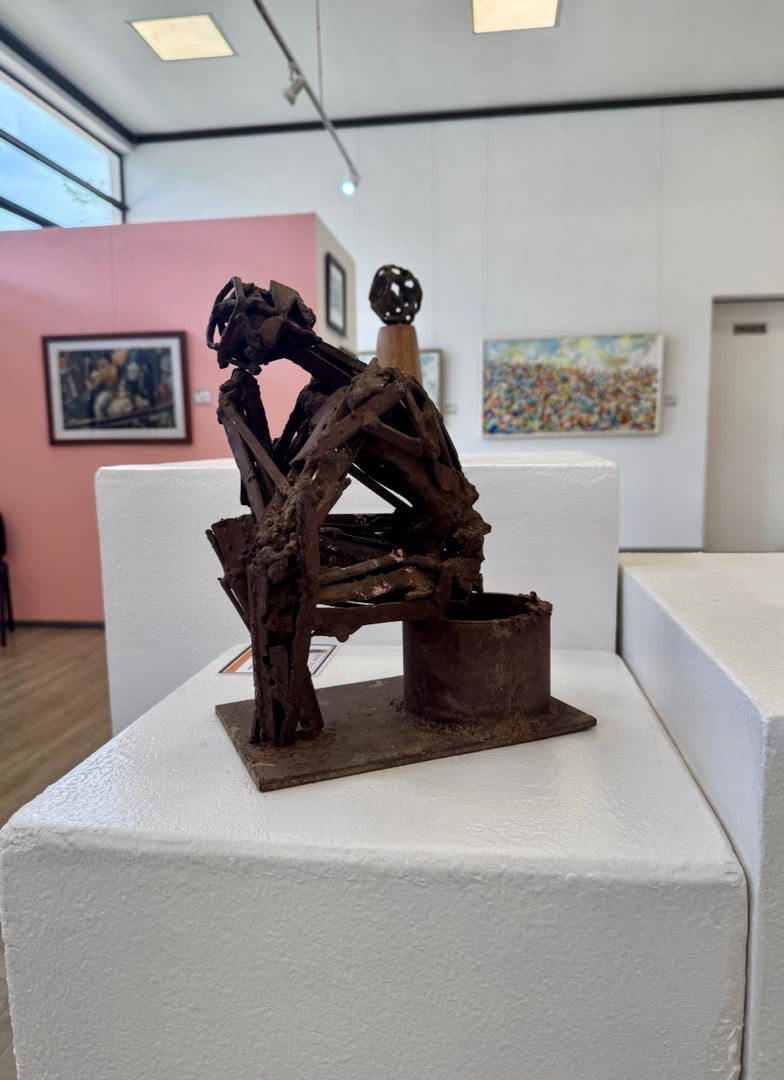
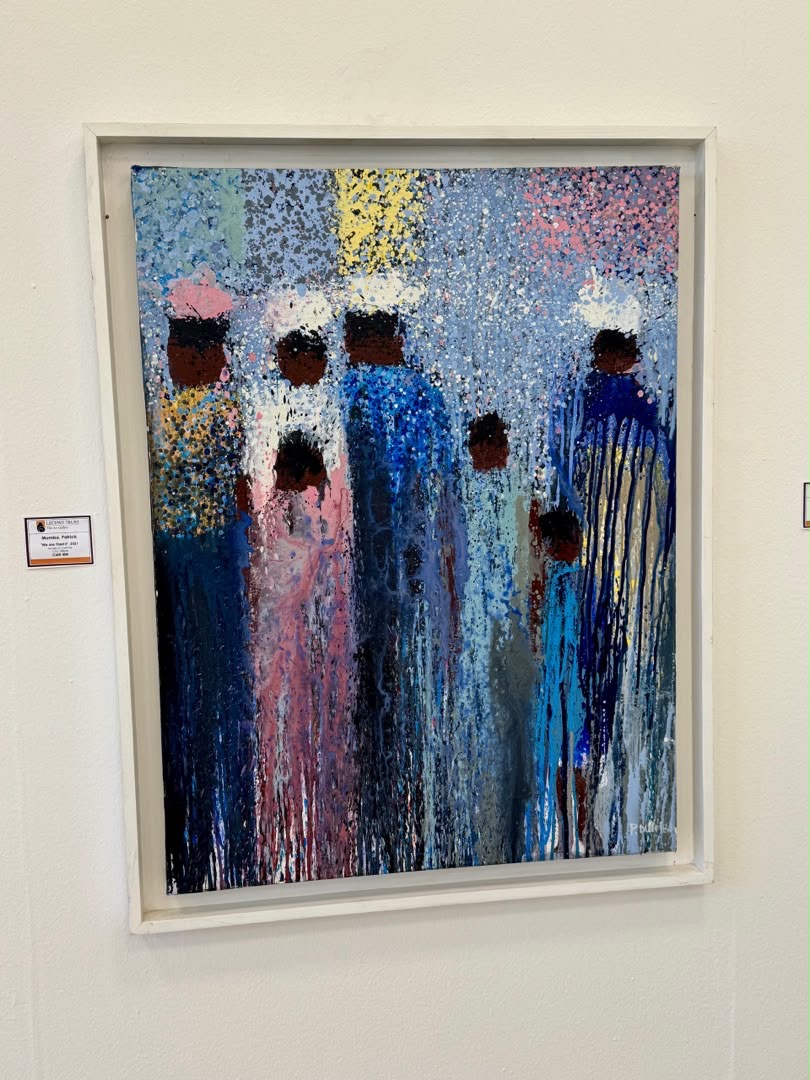
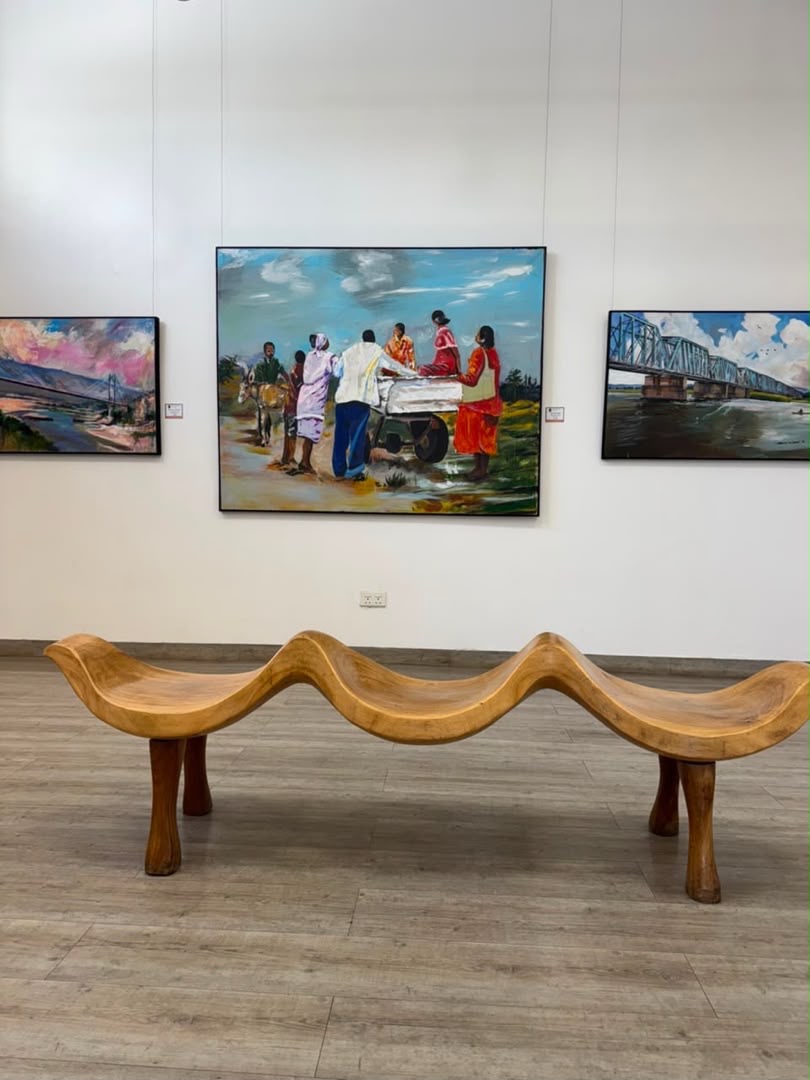
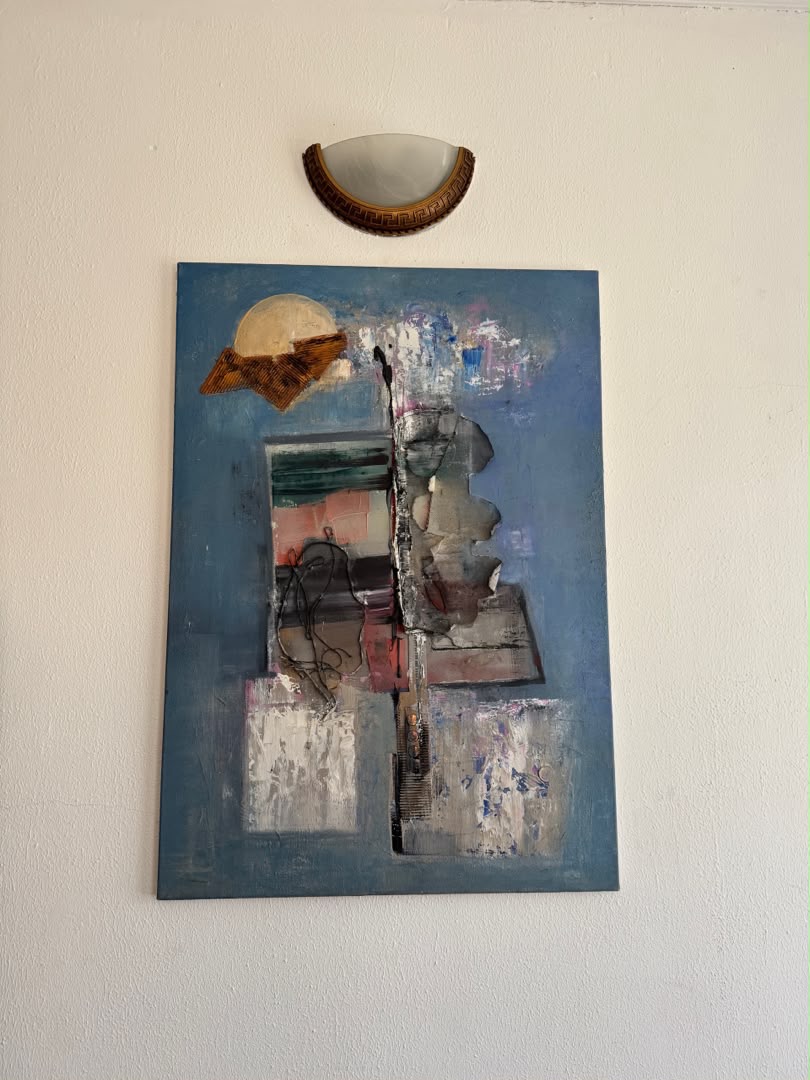
(Images courtesy of Simweene Sijamba)
A Domestic Future
A generational shift is already underway. Younger artists and audiences are increasingly interested in questioning inherited structures. They are less concerned with performing a fixed African identity and more invested in exploring complexity.
This transformation raises new possibilities. What if art in Zambia were encountered less as exhibition and more as conversation? What if homes, studios, and community spaces functioned as interconnected archives? What if collecting were understood as cultural guardianship rather than accumulation?
Decolonial practice does not always require dramatic institutional reform. It can begin with everyday decisions: buying local art, visiting studios, supporting emerging artists, opening private collections to dialogue, and integrating art into domestic life.
Ultimately, art as a vehicle for transformation lies in relationship. It is not only about what is produced, but how it is lived with.
The home, therefore, emerges as a powerful site of renewal. It is where cultural memory is protected from erasure. It is where new meanings are born. It is where art ceases to be distant and becomes intimate.
And perhaps transformation begins precisely there: not in the spectacle of global recognition, but in the quiet, deliberate act of living with art.
-END
About The Cave
The Cave is an independent Zambian institution dedicated to art, archives, research, and cultural memory. Founded by Simweene Sijamba II, it works to document, preserve, and advance cultural knowledge through collecting, publishing, exhibitions, and interdisciplinary research. The Cave fosters critical engagement with Zambia's artistic and intellectual heritage while supporting contemporary cultural production and public discourse.
A place of return,
Art, archives, research, and cultural memory,
All things engraved.

.jpg)