Something Meaningful Out of What Seems Like Nothing
.svg)


.svg)
.svg)
Something Meaningful Out of What Seems Like Nothing
Odirile Khune Motsiri on fibre, memory, transformation, and building new material languages
By Nolwazi Lushaba
July 23, 2026
Before Odirile Khune Motsiri began making artworks from salvaged fabric, paper, thread and other reclaimed materials, he was already learning to see value where others saw waste.
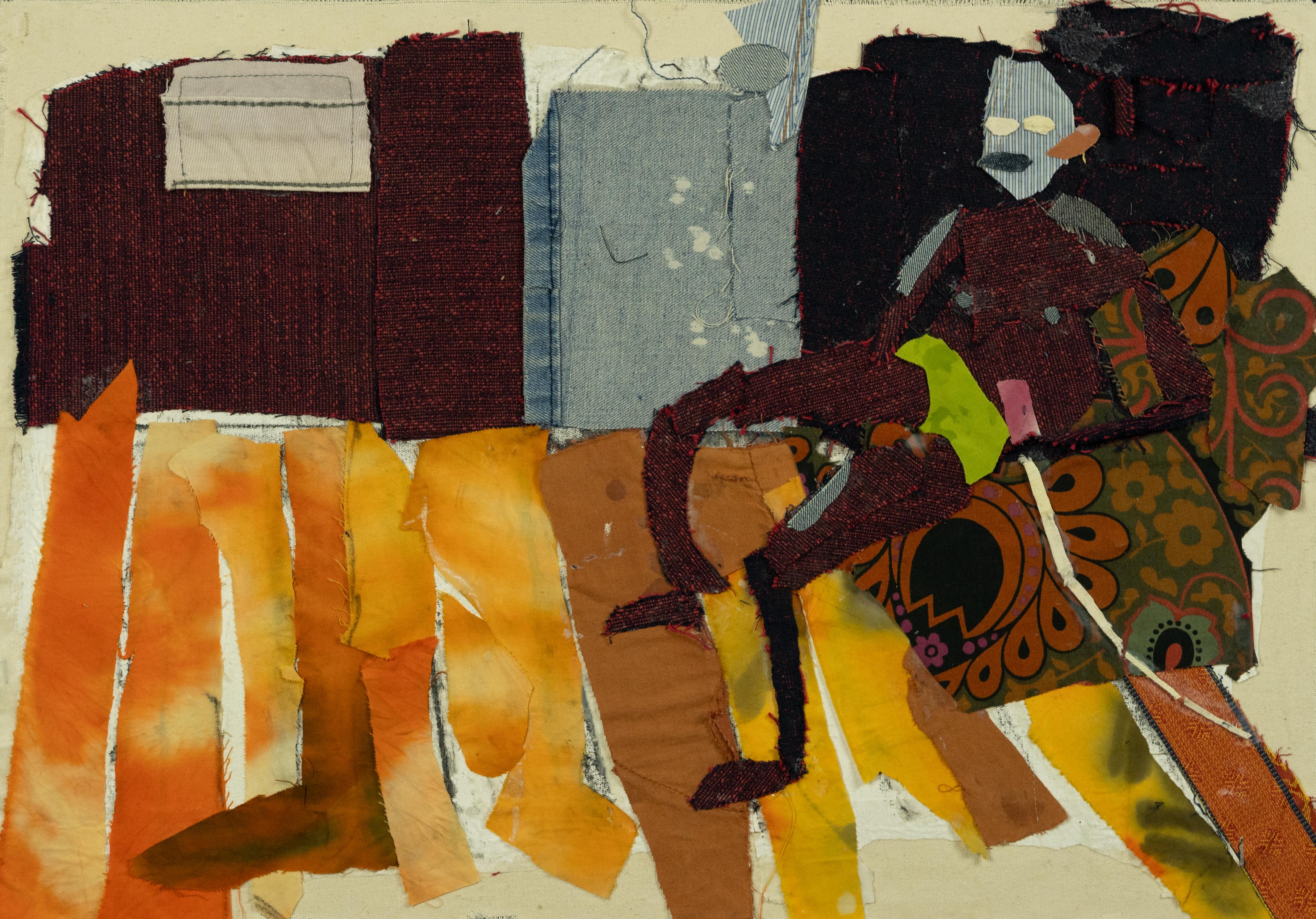
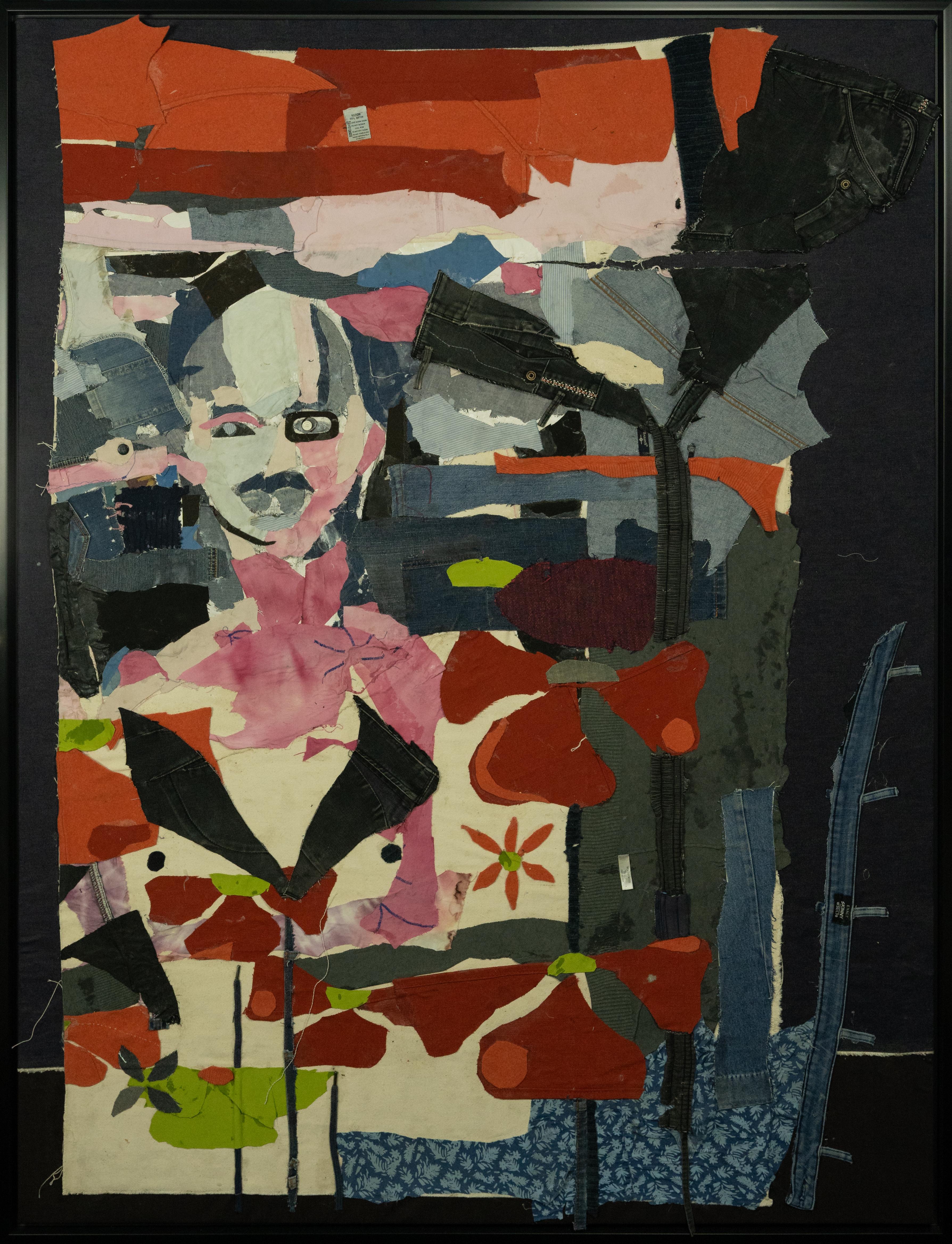
His childhood memories of watching both of his grandmothers work at their sewing machines, handling fabric off-cuts and witnessing everyday acts of making became the quiet foundation of a practice that now moves between portraiture, sculpture, fibre and material investigation. His work often begins with discarded materials but develops into more complex questions about identity, labour, memory, transformation and the ways in which meaning accumulates through use.
Throughout the conversation, Motsiri returns to curiosity—not as a stage to outgrow, but as a method. Materials become collaborators, accidents become part of the structure and imperfection becomes a way of remaining open.
Nolwazi Lushaba: Please introduce yourself.
My name is Odirile Khune Motsiri. I am a fibre artist, and I recently completed an honours degree at Tshwane University of Technology. I also lecture part-time in the university’s Surface Design Department, where I teach first- and second-year students.
I have exhibited locally and internationally. My work is represented by Guns & Rain and is also held in the ARAK Collection.
Nolwazi Lushaba: Where did your journey as an artist begin, and what drew you to art as a form of expression?
My journey began when I was a child. I loved reading, but the books always had to contain pictures. My mother would buy them for me, and I would try to copy the images I saw.
That is how I remember first attempting to make art. Drawing allowed me to express things I felt unable to say aloud. When I read books without illustrations, I would draw my own interpretations of what I thought the writer was describing.
That continued throughout primary and high school. I would doodle on desks and scribble in my schoolbooks. Even my classwork books had little drawings at the back.
My professional journey began in 2017, when I left engineering and decided to pursue art seriously.
The Material Was Already There
Nolwazi Lushaba: How did your childhood environment and family background contribute to your creative path?
I grew up surrounded by family. My sibling and I would visit our grandparents on weekends, and both of my grandmothers often worked at their sewing machines.
I was not allowed to use the sewing machines, so I played with the off-cuts and scraps that would otherwise have been thrown away. I tried stitching them together, but it was never anything serious. At the time, it was simply play.
I also remember my great-grandmother knitting mats from plastic bags. That stayed with me.
Later, when I was introduced to the possibilities of fibre during my studies, I realised that those early experiences had already shaped my relationship with the medium I would eventually work in.
Nolwazi Lushaba: Did working with those discarded pieces spark something in you at the time, or did you only recognise their importance later?
At that stage, it was mostly curiosity.
That curiosity still informs my work because I remain inquisitive about different materials, particularly fibre. As a child, my questions were simple: Why are they throwing these things away? Why can’t they make something else from them?
It was also a way of playing with materials and discovering what they were and how they felt.
That experience continues to shape how I work and how I care for materials. Whether I am developing a concept, making an artwork or discovering something unexpected, I am always interested in how materials respond.
“Why are they throwing these things away? Why can’t they make something else from them?”
Leaving One Life for Another
Nolwazi Lushaba: What made you leave engineering for art?
Engineering was not fulfilling for me. I knew I needed to be somewhere else.
I initially pursued engineering on my parents’ advice, with the understanding that I could pursue art after obtaining the qualification. But once I experienced the demands of that path, I realised that it left very little room for me to practise art.
I would leave home at around four in the morning and return at eight at night. There was no time left for what I actually wanted to do.
In 2017, I made the bold decision to leave engineering and enrol in my first year of art. I had known since 2013 that this was what I wanted.
Nolwazi Lushaba: Which three words would you use to describe your body of work?
Constructive. Textural. Naïve.
Working with the Unknown
Nolwazi Lushaba: Your work is characterised by transformation and layered materiality. How do you choose the materials you use?
My choices are usually informed by what is happening around me and by the subject I want to explore.
I begin by asking how I can develop the concept and connect it to a particular material. I then consider what I have already collected and stored, because I am constantly gathering things.
If I decide to work with newspaper, I will ask someone to collect it for me so that I can build up a supply. If I need fabric off-cuts, I collect them from artists, fashion designers, or tailors.
My choice of material is always connected to what I am trying to express. Whether I am working with paper or fabric, I ask how the material can communicate the idea and how the concept and medium can work together.
Nolwazi Lushaba: Tell me about a work that surprised you while you were making it.
One of my most recent works surprised me because it developed in a way I had not anticipated.
While preparing for my honours final presentation, I began cutting pieces from existing works. The new work developed through a combination of ideas and conversations with people who visited my studio and shared what they saw emerging.
Sometimes viewers have to squint before an image reveals itself—whether it is a dove, a face, or something else.
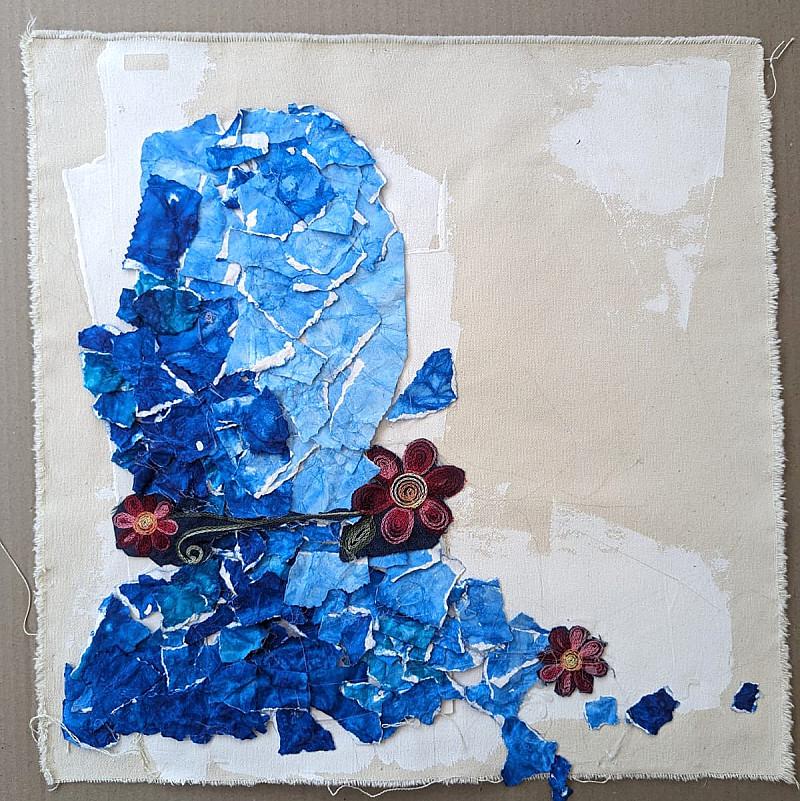
This particular work began with paper. As I manipulated it, the paper formed a relief that unexpectedly resembled a mouth. I realised that this might be a technique I could carry into future work.
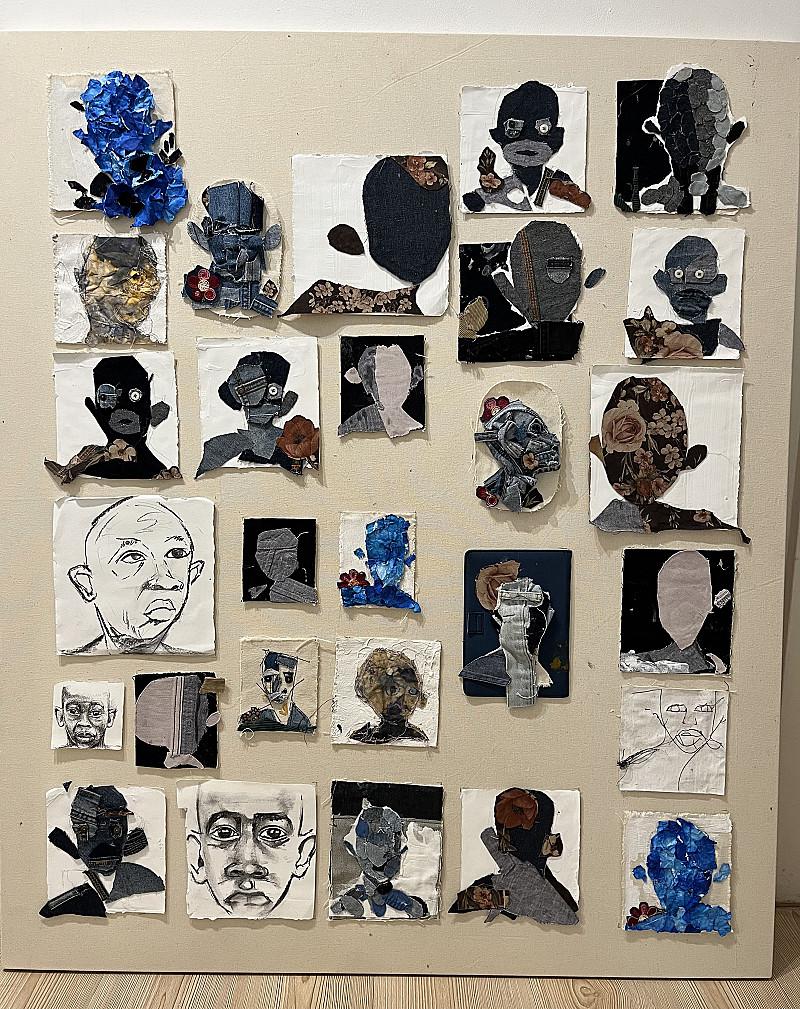
It became a turning point. I was no longer working solely with abstraction; I had discovered a way to introduce portraiture through relief. The process eventually led to sculptural and hanging forms.
That single work opened up many other possibilities. I began with one intention and arrived somewhere completely different. I think I simply fell into it.
“I started with one intention and arrived somewhere completely different.”
Beautiful Mistakes
Nolwazi Lushaba: What stories are you telling through your work?
I tell stories about resilience, labour and, most importantly, identity as it is shaped by lived experience.
I also want audiences to question what they consider disposable or inert and to consider how such materials can be transformed into something that speaks to them.
Nolwazi Lushaba: Is there a recurring emotion that you find yourself returning to in your work?
Yes. I think it emerges in the silence of the work.
There is a constructive voice that guides the direction the work might take. That voice is determination, but it is also about allowing fate to play a role.
I cannot control how audiences will respond to my work. As an artist, I keep changing things, hoping that the work will become what I imagined. But I also want to reach a point where I can accept flaws and imperfections and allow them to exist.
Sometimes these imperfections are simply beautiful mistakes that come together to make the artwork what it is.
Working with the unknown pushes me to become comfortable with myself and with what I am creating. Because I work with uncertainty, I am constantly negotiating with myself. I cannot fully control how an artwork will feel or how it will be received.
“Sometimes these things are simply beautiful mistakes.”
Nolwazi Lushaba: How do you understand the relationship between destruction and creation in your practice?
I think about construction and deconstruction through my relationship with materials.
I might look at a pair of jeans and think, “This is still a perfectly good pair.” At the same time, I may feel an urgent need to use it to create a portrait or a new work. Then I ask, “What else can this become?”
Eventually, the desire to transform the object becomes stronger than the desire to preserve it.
For me, deconstruction is not destruction. It is transformation.
I think of my relationship with materials in the same way a gardener thinks about pruning. You remove something so that growth can take place. That process feels natural to me; it is part of creation.
Expanding the Language of Fibre
Nolwazi Lushaba: Which artists have influenced your practice?
I have been greatly influenced by the fibre artists I have encountered in South Africa and by discovering their work.
Technically and aesthetically, I look at artists such as Hannelie Coetzee, Magdalena Abakanowicz, and Nicholas Hlobo, among others.
I am also influenced by the people who support my practice behind the scenes and by the institutions helping to build a stronger discourse around fibre. It takes a community to expand the place of fibre within contemporary fine art in South Africa.
Nolwazi Lushaba: How does South Africa’s cultural and political landscape shape your perspective?
Because public understanding of fibre art remains limited in South Africa, we must continually create opportunities for conversation.
Culturally, this allows us to develop new frameworks for understanding what art can be within the South African context. People who have not previously encountered fibre art begin to engage with it, while those who are already familiar with contemporary art develop new interpretations.
Politically, South Africa is constantly shifting. This creates space for art to evolve and respond directly to society. Even someone who does not consider themselves politically engaged can enter a larger social conversation by encountering art.
Nolwazi Lushaba: Do you draw inspiration from other art forms, such as music and dance?
Yes. I love listening to jazz while I work because it helps me sustain a longer train of thought. I also listen to hip-hop and house, depending on my mood.
There are different rituals in my studio. Working at night feels different from working during the day, and music plays an important role in shaping those atmospheres.
I also dance outside the studio. It helps me release pressure and return to the work with renewed energy.
Thinking Beyond Limits
Nolwazi Lushaba: How did your relationship with the ARAK Collection begin?
I was introduced to the collection through Guns & Rain and Julie Taylor. AbdulRahman became interested in acquiring my work, and I later reached out simply to thank him.
That is how our relationship began. I believe it was around 2021 or 2022.
Nolwazi Lushaba: Does being part of a major African collection change how you think about who encounters your work?
Yes. The platform matters because it allows many different people to encounter my work.
Someone working in academia might engage with it through writing and research, while someone who simply loves art may respond to it more personally.
There is also a sense of belonging. You pause and allow yourself to feel proud. You realise that you are contributing to something meaningful.
Nolwazi Lushaba: Are there new ideas or materials that you would like to explore?
I am always curious about how different materials respond to different concepts.
I would like to explore more synthetic materials. We live in a world in which synthetic materials are often viewed negatively, but they also offer opportunities to think about recycling, repurposing, and responsible disposal.
My practice is rooted in showing people that something meaningful can come from what seems like nothing.
Working with these materials also makes me think about homelessness and the inexpensive or discarded materials that people use to create shelter. These materials allow me to reflect on both environmental and social conditions.
The way I define my medium may continue to evolve, but the foundation of my practice will remain rooted in fibre, whether synthetic or natural.
“My practice is rooted in showing people that something meaningful can come from what seems like nothing.”
Nolwazi Lushaba: Is there a particular space, curator or audience you would like to engage with next?
I would love to participate in a major art fair and share my recent work with a wider audience.
I would not name any one person. I am open to different conversations and possibilities, so I am keeping my doors open.
Nolwazi Lushaba: When you imagine the next chapter of your practice, what do you hope to contribute to the larger conversation around African art?
I hope my greatest contribution will be helping to secure greater recognition for South African fibre art.
I want questions of materiality and the language we use to discuss fibre practices to become more central to our artistic discourse. For me, fibre is a vessel that carries these ideas forward and opens up new ways of understanding the medium in South Africa.
I also want to conduct workshops because I believe deeply in teaching. I want to pass on the knowledge I have gained and inspire minds that will, in turn, inspire others.
I want young artists and communities to think beyond perceived limitations, respond creatively to the challenges in their environments and use art to imagine possibilities beyond the circumstances they are trying to overcome.

.jpeg)