Stone Inheritances: Isheanesu Dondo's Works at the Arak Collection
.svg)


.svg)
.svg)
Stone Inheritances: Isheanesu Dondo's Works at the Arak Collection
Sihle Motsa
The Zimbabwe of my mind is painted in historical colours. It is tainted by nostalgia. Every frame of reference is stained by the shades of my longing—for its freedom, its revival. I can hardly perceive the Zimbabwe of today. Things are further complicated by the fact that nostalgia, rather than being mnemonic, fictionalises. It creates false images and convinces us that they are the stuff of history—our personal history.
Because of this, I have been guilty, as have so many others, of deploying the country as a metaphor rather than, as Zimbabwean writer and journalist Percy Zvomuya writes, an actual place: a physical terrain whose people have hopes, ambitions, and fears. In light of this tendency to fictionalise, the question is: how does one access an alternate Zimbabwe? How does one weave through myth and political symbolism to uncover the unspoken cosmology—the fantastic, beguiling, unruly Zimbabwe? How does one encounter the Zimbabwe lived by Zimbabweans, seen through the eyes of both those who still inhabit its landscapes and those who have sought refuge elsewhere from harsh economic and political realities?
It is within this space between memory, mythology, and lived reality that Isheanesu Dondo's work emerges. Embedded within these images is a deep and expansive metaphysical discourse. The human and the animal exist in an uncanny dialogue. Both direct their attention toward a powerful symbol of time and transformation. United in their reverence for the moon, questions of being, belief, and meaning are brought to the fore.
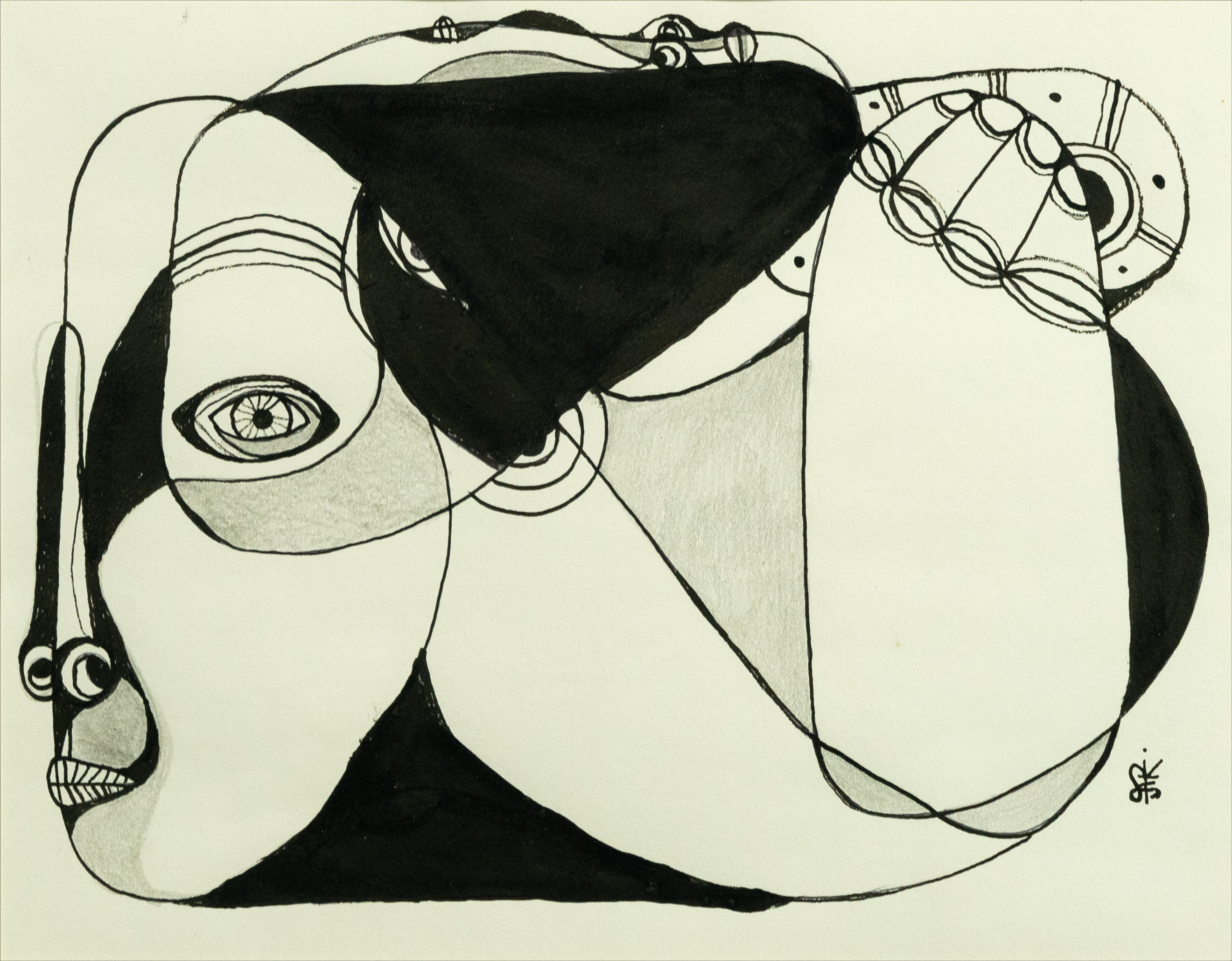
Isheanesu's work does not lend itself to simple allegory but is shaped by the historical and political complexity of its age. Its apparent simplicity conceals a thoughtful practice, one that contends with the recovery of myth in the face of ongoing cultural and epistemic erasure. The curvatures of his lines and the black and grey tones of his pen serve as a portal to the philosophies that shape African systems of belief. His forms and symbols hark back to historical modes of knowing while remaining attuned to the metaphysical uncertainties of the present.
From the surface of the page, a confounding image emerges. Lines follow the command of the artist and unravel tales that would otherwise go unheard. Isheanesu Dondo was born in Zvishavane, Zimbabwe, in 1985. By the time of his birth, the promise of liberation still lingered, even as the realities of post-independence nationhood were beginning to emerge. Today, only fragments of those early hopes seem to remain, and the nation continues to grapple with profound social, political, and economic challenges. Yet the aesthetic pulse of the land continues to throb. Artists like Isheanesu continue to excavate ancient symbolisms while crafting iconographies suited to the present age.
Against this backdrop of a Zimbabwe burdened by its past and haunted by its future, Isheanesu's works are both playful and enigmatic. The artist works primarily with paper and ink, tracing Shona myth and African cosmology through abstract figures.
That colonialism precipitated a deep crisis among the people it ensnared in its grasp is no secret. As decolonial scholar Aníbal Quijano makes apparent, the colonial matrix of power indelibly shaped the episteme. Over the colonised, it enacted a form of epistemic violence that remains unresolved. Through imperialism, it constructed Eurocentric systems of thought that relegated non-Western epistemologies to a subordinate status. In establishing Europe as the legitimate producer of knowledge, it negated traditions, practices, and systems of knowing that it deemed useless or morally repugnant, while appropriating those it considered useful to its modernist project. The many colonised peoples who now inhabit a unified Zimbabwe were not spared this epistemic violence.
Great Zimbabwe—the ruins of an enthralling Iron Age city—is located in the south of Zimbabwe. The site, consisting of multiple structures built from rectangular granite blocks, is believed to have been constructed by the Shona around 1000 CE. Spanning a vast circumference and displaying remarkable architectural complexity, the site is also associated with important cultural artefacts, including the famous Chapungu bird sculptures. There is evidence that Great Zimbabwe was an important participant in Indian Ocean trade networks from this period until the sixteenth century.
During the nineteenth century, the ruins occupied the historical imagination of European colonialists, many of whom journeyed to the site. At a time when ethnographic and historical inquiry was deeply entangled with colonial imperatives, the prevailing belief was that these structures could not have been built by Africans. Eurocentric thought insisted that Africans could not have possessed the mathematical, geographic, and cultural knowledge required to create such a sophisticated architectural complex. Put differently, Africans could lay no claim to such an early civilisation, as this would place them in direct dialogue with other great civilisations across the globe.
The consensus therefore became that Great Zimbabwe had most likely been built by people of Semitic or Grecian origin. According to Percy Zvomuya, Cecil Rhodes—one of the most influential imperialists of the period—believed that Great Zimbabwe was an ancient Phoenician settlement. It took the archaeological evidence of David Randall-MacIver and Gertrude Caton-Thompson to demonstrate conclusively that the origins of the ruins were African.
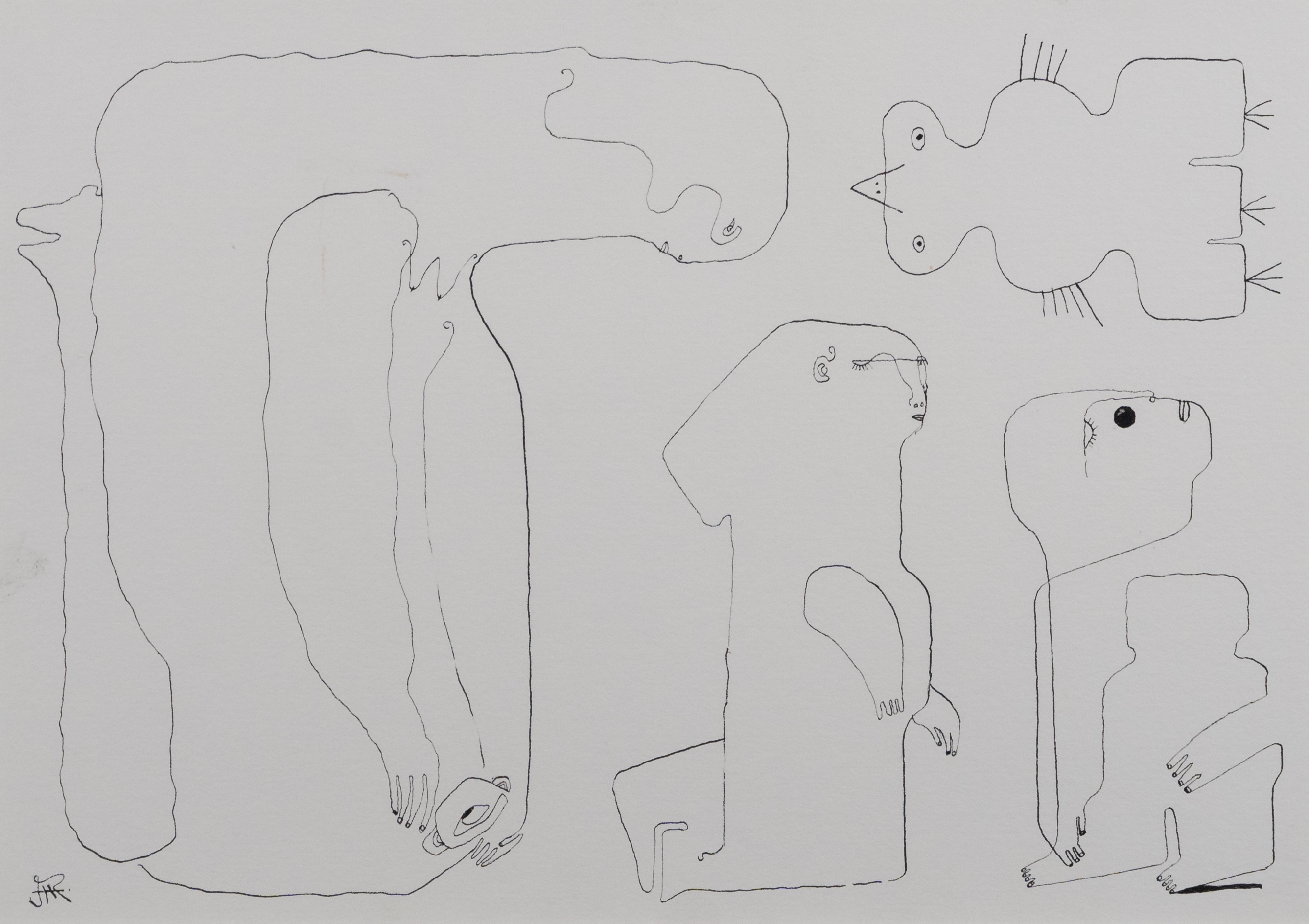
In Playtime, a delicate work executed in pen on watercolour paper, traces of Great Zimbabwe are evident. The abstracted figures carved by Isheanesu's pen are rectangular yet sinuous. Though seemingly static, they appear fluid, a quality that demonstrates the artist's ingenious use of space. The delicate forms that inhabit Isheanesu's paper are always in a peculiar dialogue. It is as though they have been convened by a master negotiator. Their parley evokes the geometric and sculptural forms of Great Zimbabwe.
Isheanesu uses the line, a fundamental mathematical component, stretched thin across the page, to conjoin the historical and the artistic, the esoteric and the aesthetic. His imagery exhumes long-buried epistemic traditions that shaped ancient African civilisation and gave rise to its accompanying cultural and mythic repertoires.
In the top-right corner of the image is a bird drawn in Isheanesu's distinctive visual register. One cannot help but read it as a reference to the Chapungu bird. The Chapungu occupies a special place within the Shona mythic world. It also recalls the country's colonial history, as the first bird sculptures discovered at Great Zimbabwe were pillaged. Several ended up in the possession of Cecil John Rhodes, who displayed them in the library of his Cape Town residence, while another found its way to Berlin's Ethnological Museum.
Although these sculptures have since been returned to Zimbabwe and the bird has become a national symbol, appearing on the country's flag and coat of arms, Zimbabwe's economic future and political fate remain uncertain.
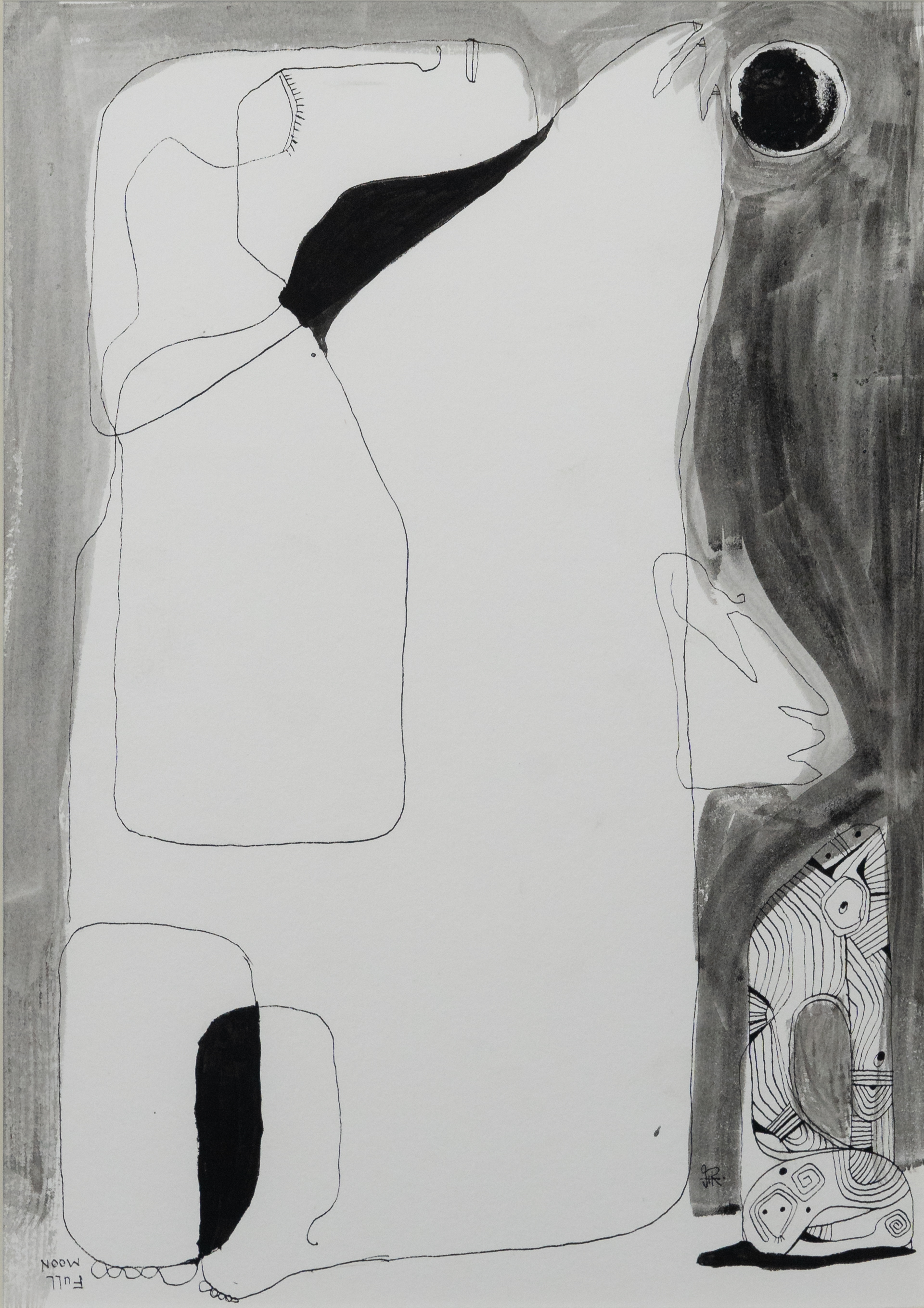
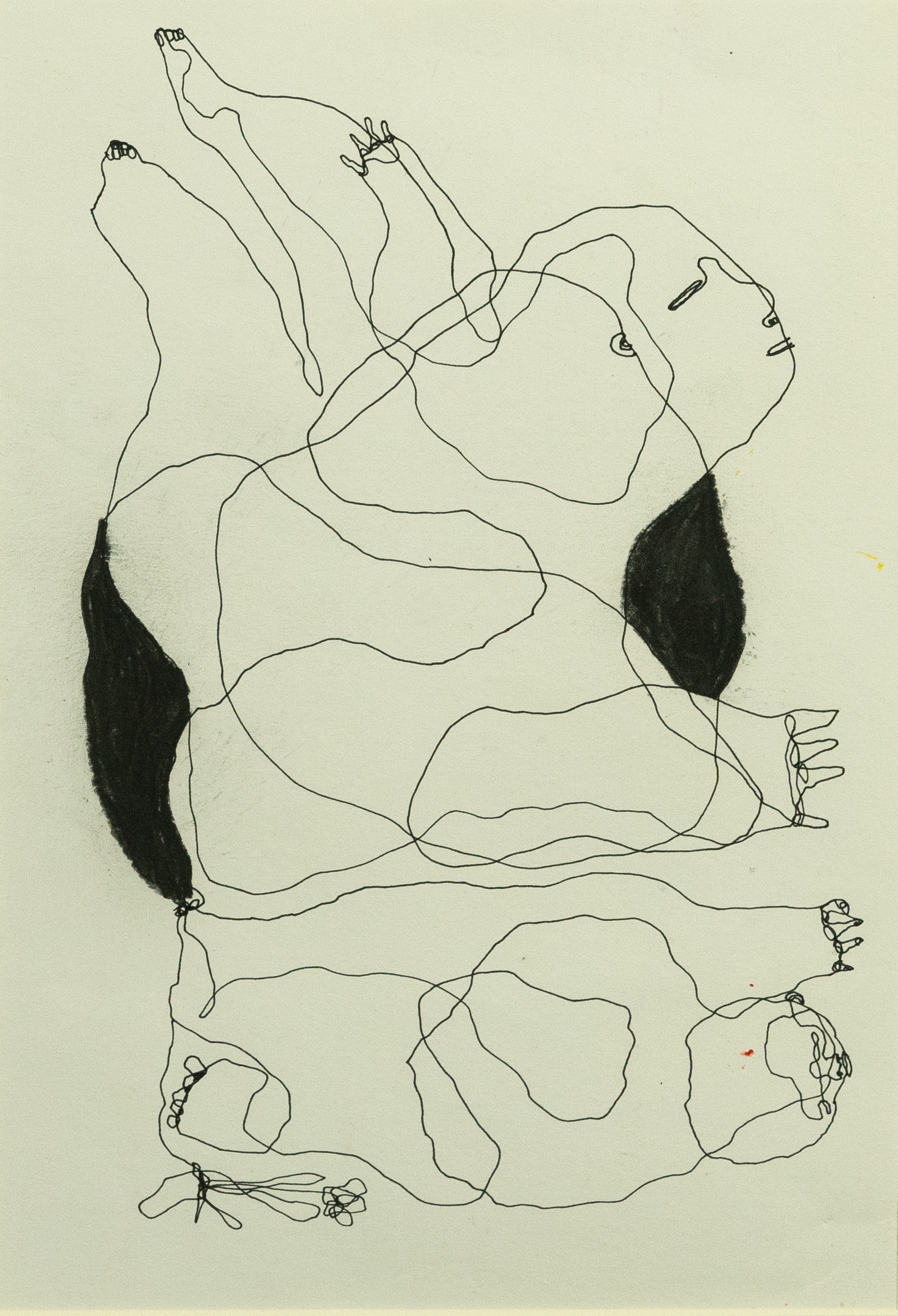
In Full Moon, a work created using Indian ink and the artist's signature pen-on-paper technique, Isheanesu presents another enigmatic scene that remains beguiling despite its mystery. A rectangular outline with rounded edges occupies much of the page. Its face is directed toward a full moon positioned in the top-right corner of the composition.
The figure possesses both animal and human characteristics. It has paws and sharp claws, yet also bears the soft expression of a human face, complete with curled eyelashes resting upon closed eyes. There is an air of solemnity about the figure. In the lower-right corner stands a totem, patterned with the delicate lines characteristic of Isheanesu's practice. Animated and attentive, the totem also gazes upward toward the moon, as though entranced by its power.

.jpeg)