Whose Destiny? Within But Without: Henry Tayali And The Painting He Could Not Reclaim


Whose Destiny? Within But Without: Henry Tayali And The Painting He Could Not Reclaim
Words by Kamota Mayondi-Mazombwe
What would you call your life's greatest work? What price would you put to it? What’s more, what lengths would you go to, to reclaim it?
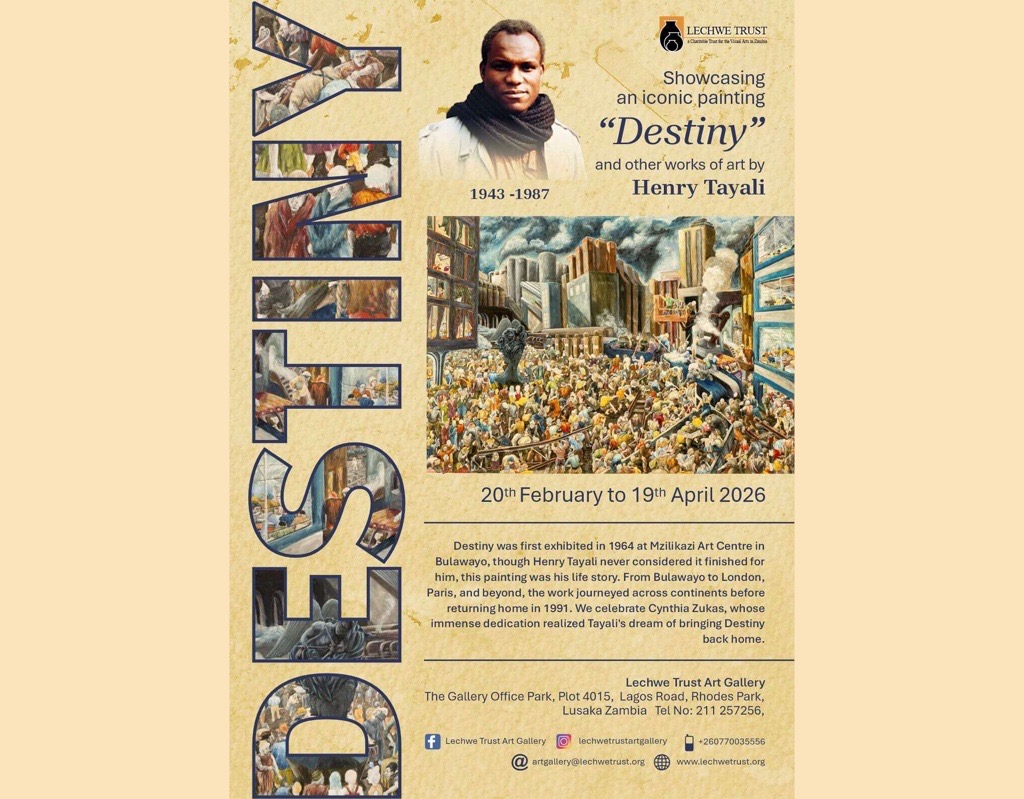
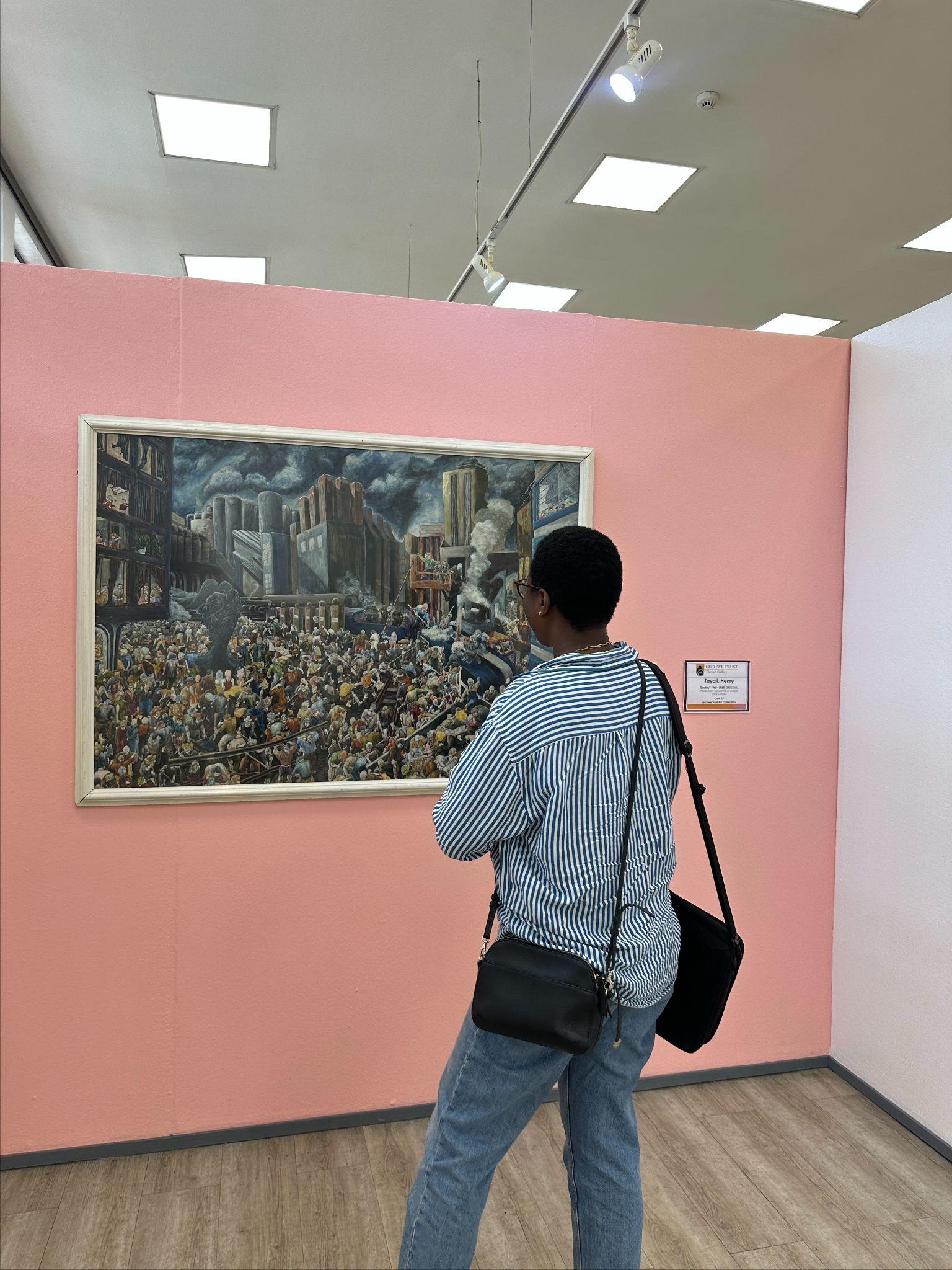
Described as his magnum opus in the Lechwe Trust Gallery’s exhibition catalogue, Destiny, one of Tayali’s most prolific pieces, was painted by the artist as an amateur, years before he sought any formal art training.
The level of detail in this industrial, racially ambiguous mesh of bodies, which interplays disaster, life and business as usual; hints at something beyond training. To stand before it is to look at the world from an omniscient point of view.
The painting itself is powerful. Yet Tayali would die without owning it.
I imagine the day he was born in 1943, his parents holding their newborn wondering what destiny lay ahead of him. A path that likely felt pre-destined and at best, one more African body to throw into the belly of the earth.
At the time of his birth, mining was booming and the Tayali family, like other indigenous Rhodesian families at the time, hoped to make the best of difficult circumstances in pre-independence Zambia.
A migration further south brought the Tayali family to Bulawayo, Southern Rhodesia, during Tayali's formative years. But the new land swallowed the dream before it could take root — Tayali's father lost his employment in the very place that was supposed to make life better.
I imagine what that does to a boy.
Is boyhood even a possibility for a black boy living under colonial rule?
When I look at Destiny, it is not the kind of work I see a young man, just entering adulthood, creating. We describe Tayali’s work as political, while he simply painted his reality. The painting speaks to the times and more pointedly, perhaps to his frame of mind at the time.
A lot of what exists about Destiny is its journey back home and what the work depicts, but what about the inner world of the man who created it?
To better understand the minds of visual artists, before making assumptions, I had conversations with a few artists to understand what happens when a particular artwork doesn’t sell.
Several accounts of the history of Destiny confirm that it was first exhibited in 1964 and again in 1965, returning to Tayali unsold on both occasions. I was not surprised that upcoming and established artists alike said there was an amount of disappointment when work went unsold.
Could have Tayali experienced the same? Crushing disappointment that his work failed to sell, not once, but twice?
That, in addition to his family background…
There are inconsistent narratives about his upbringing. Some claim he was supported in his pursuits, but would it be far-fetched to assume that becoming an artist was not the type of career an African parent would be happy for their child to pursue in the mid-1960s? Looking back, Zambia had just gained independence and opportunities for Zambians were starting to look better. An art career might not have been a supported first choice.
To confirm my assumption that Tayali’s artistic pursuits may not have initially been supported by his family, I did more research and came across the following account:
As artist and art historian Godfrey Setti notes in his thesis from correspondence with Rose, Tayali's wife, "Henry painted secretly at night under the street light for fear that his father would throw him out, together with his paints and brushes, which he did regularly once Henry was found painting" (Setti, 2001, p. 39).
When I think of the passion and creativity that goes into each piece created by an artist, I think I would be correct in assuming that when Tim Gibbs, an affluent British man and son of a governor, came along to buy Destiny; a possibly dejected and frustrated Tayali was happy to finally sell it, possibly even being in need of money at the time.
My initial assumption was to villainise Gibbs as taking advantage of Tayali’s circumstances, but sometimes the villain in the story is our unconscious biases.
In writing this I have had to face some of mine.
Creating offers the artist freedom and, in this case, selling offers survival.
Perhaps the transaction was fair.
An art buyer pays what the artist asks for.
A transaction is made.
Ownership is transferred.
Tayali returned to Zambia leaving Destiny in Bulawayo; with the money not in his pocket, but in his education trust fund. A fund administered by Eric Gargett and Hugh Ashton. As a recipient of a scholarship to study Fine Arts at Makerere University in Uganda, the money was needed to support his bigger dreams and ambition.
I believe Tayali knew the value of his work, he strikes me as confident in his abilities but sometimes hard decisions have to be made and Destiny was the sacrifice.
We speak of buyer’s remorse but what about when a seller regrets a transaction?
For years, Tayali unsuccessfully tried to buy back the painting in the early 1980s. I don’t believe he would have been naïve enough to offer the exact amount it was purchased for; he would have made a competitive offer, on par with the market rate. However, his offer was denied. In lieu of selling, the painting was loaned to him as part of his international exhibition across Europe.
It was at this point my view of Gibbs softened. Loaning the painting to Tayali was considerate. It is speculated that after touring Europe, Tayali held onto Destiny, breaking the agreement he had with the Gibbs to return it within an agreed time frame.
I was amused at the idea of him holding his painting like some sort of hostage-situation.
Why would he do that?
Was it in hope for a change of heart? That through this bold and desperate act, his offer to buy back the painting would be accepted?
Also, had formal training given Henry a better understanding of his art and what he had given up by selling Destiny? Or was it all just sentimental? The exhibition catalogue mentions that his family had not heard about the painting until he had tried to acquire it.
I don’t believe the motivation was financial alone.
It was about agency.
Tayali eventually returned the painting to the Gibbs but I would like to think it was with a heavy heart.
The role of money, power and proximity is a constant theme in the world of art. Adding intent further adds complexity to it all.
Two years after Tayali’s passing, Cynthia S. Zukas, founding chairperson of Lechwe Trust, and a long-time collaborator of Tayali’s, saw Destiny for the first time on exhibition in London in 1989. Cynthia engaged in a two-year long negotiation with the Gibbs family to buy back the painting, and finally in 1991, she successfully acquired it for the newly established Lechwe Trust collection of which Tayali was a founding member.
But how and why did Zukas succeed where Tayali failed?
Was it money, power, and proximity?
While Henry was a key player and pioneer within the visual arts space in Zambia, I sometimes wonder if he was within but without? We may never really know.
The marketplace of visual arts in Zambia often has a power imbalance between artists and the people most likely to buy their work or broker their transactions.
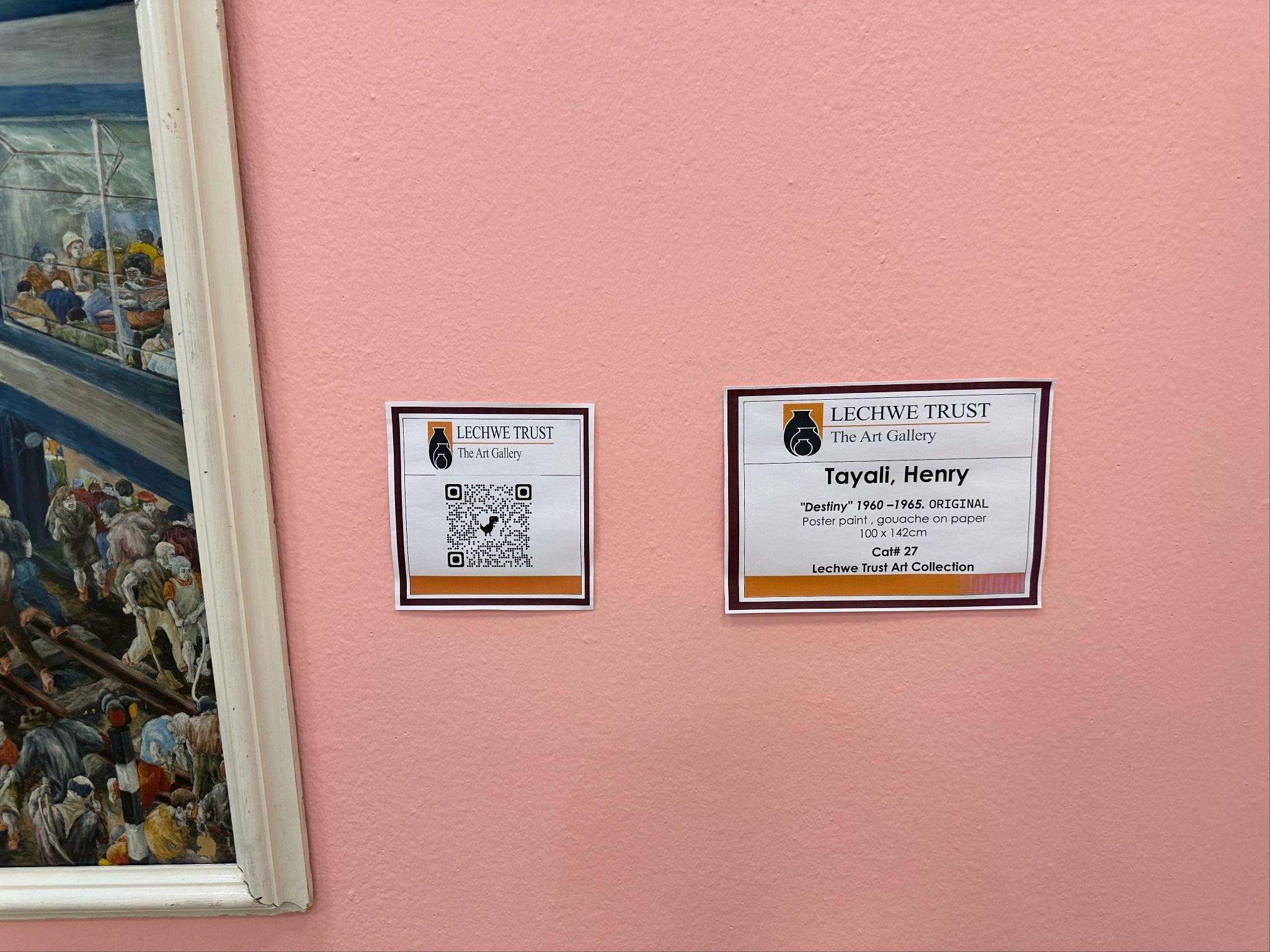
Next to the painting hang on the wall is a note:
“Destiny” 1960-165. ORIGINAL
Poster paint, gouache on paper
100cm x 142cm
Cat# 27
Lechwe Trust Art Collection
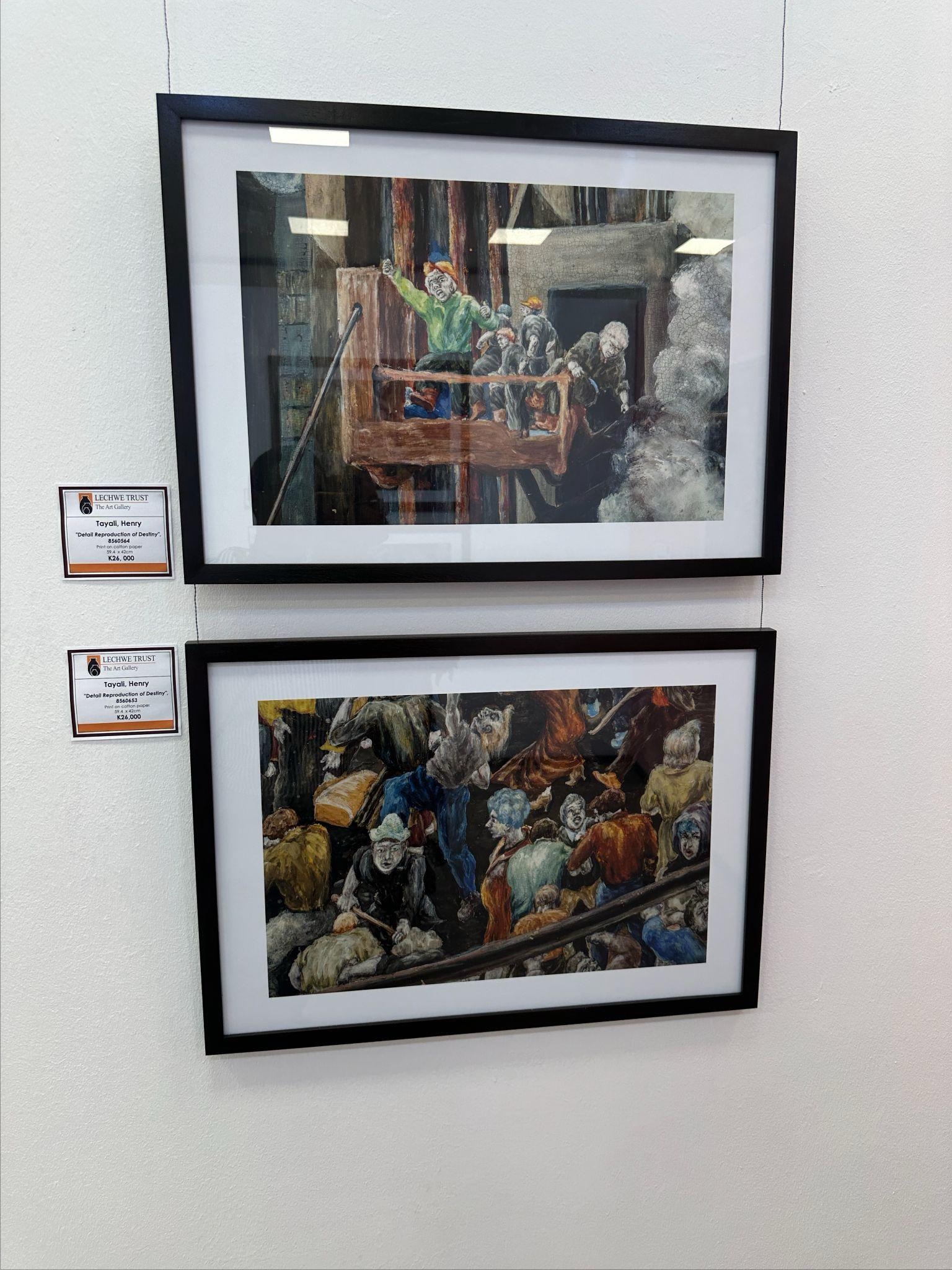
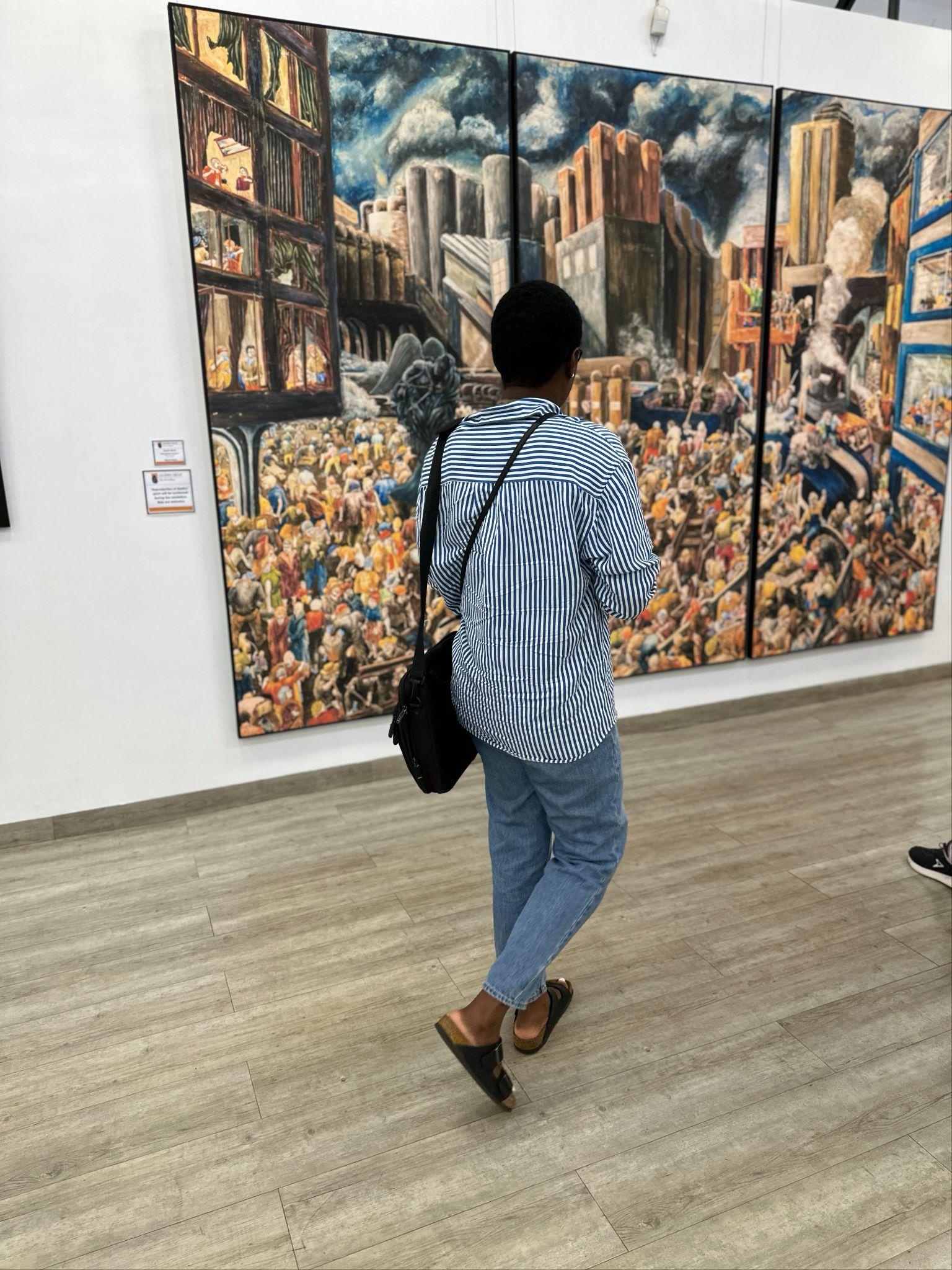
The exhibition catalogue notes that the Tayali family, as heritage holders, gave consent for the reproduction and photography of blown-up sections of Destiny. Looking at the enlarged work, you appreciate the immaculate detail and multiple narratives within the work even more. The family's approval is important and I am glad that it was sought. But I can’t help but wonder, would Henry have wanted this?
Images taken by Kamota Mayondi / Courtesy of Kamota Mayondi